Endpoint AI DLP
Traditional DLP has a detection ceiling.
Wald breaks though it.
Trusted by
Regulated
Organizations
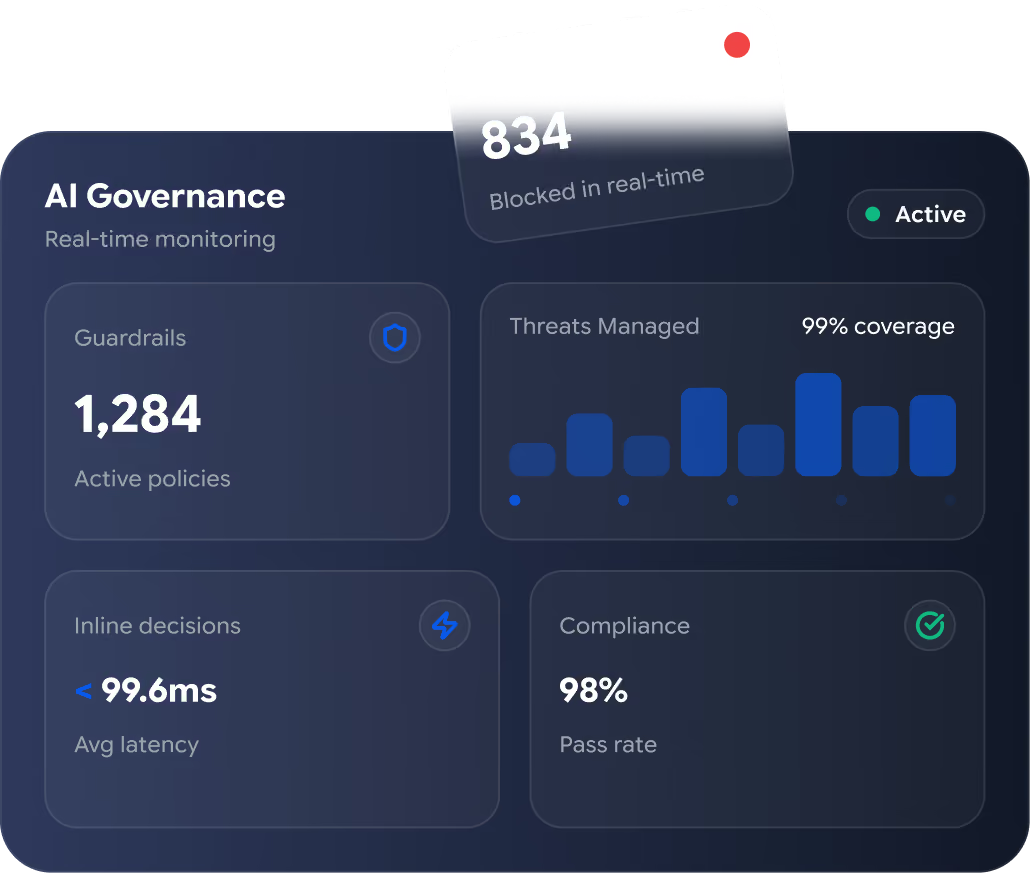
Sensitive data is contextual.
The AI Attack surface is everywhere.
Sensitivity depends on context
The same words can be harmless on their own, but sensitive when combined. Meaning matters.
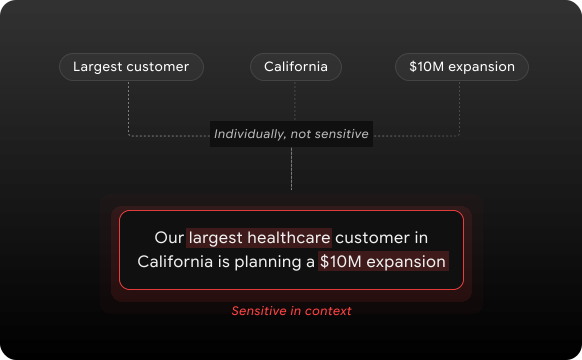
Context turns ordinary words into sensitive information.
AI interactions happen everywhere
Employees use AI across tools, apps, and workflows - not just a single website or browser.
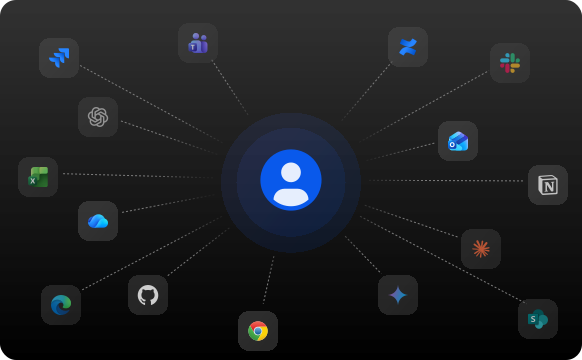
The AI attack surface spans every tool, app, and workflow.
One AI DLP Platform.
Every AI Interaction.
Secure ChatGPT, Claude, Gemini, Copilot and every major AI assistant across browsers and native desktop applications.
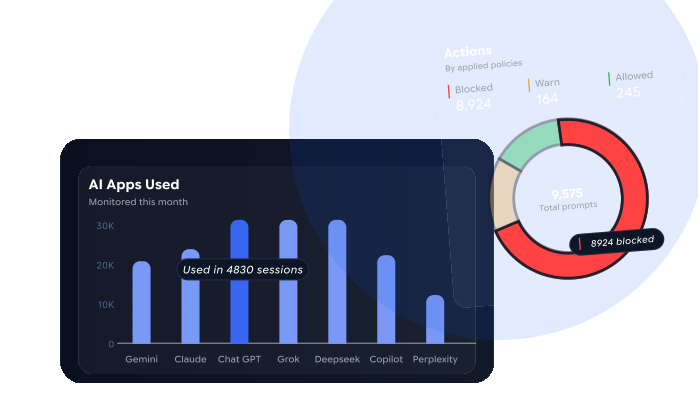
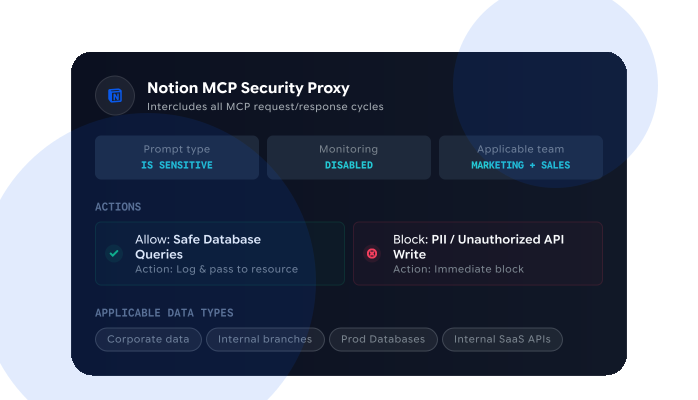
Inspect, govern and enforce policies across Model Context Protocol servers before sensitive information reaches external tools.
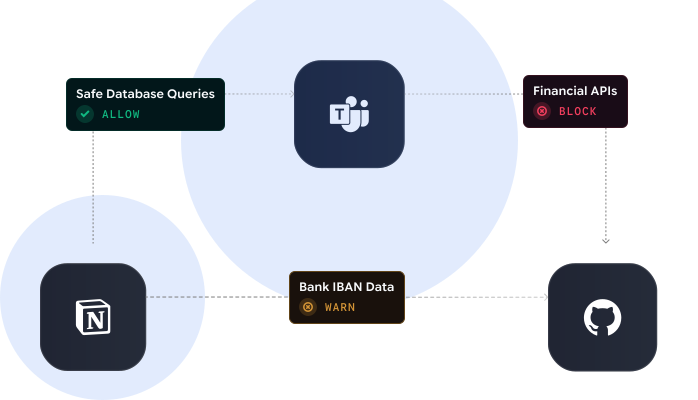
Monitor, govern and enforce AI agent interactions before sensitive information moves between connected systems.
With Deeper Visibility and Smarter Intervention.
What is On-Device DLP for AI?
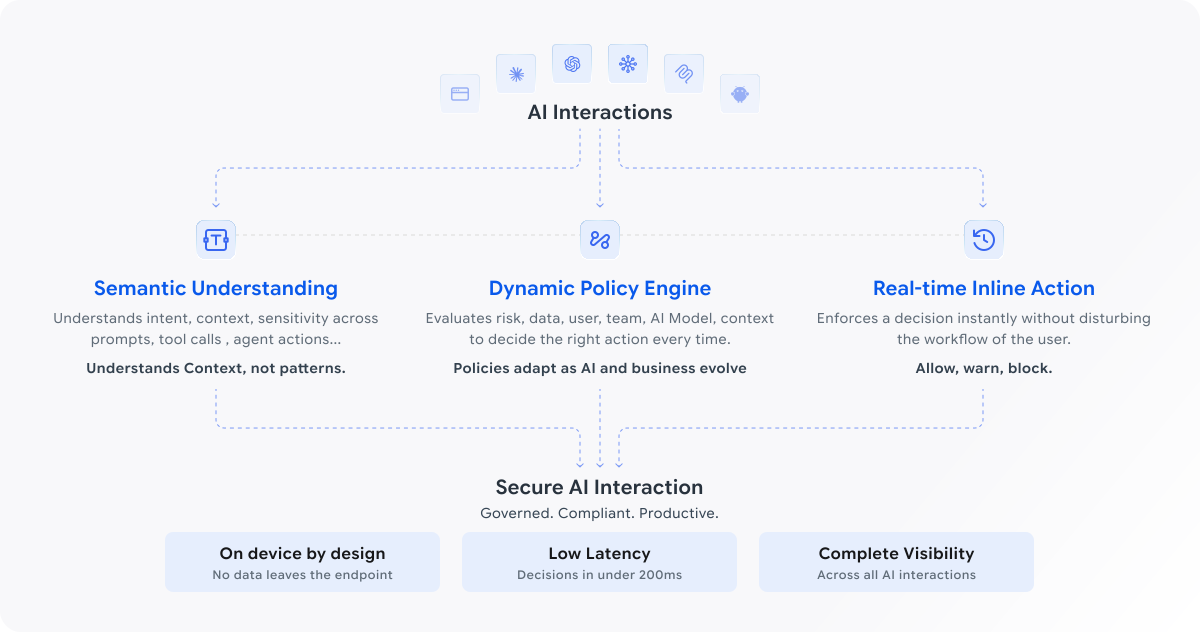
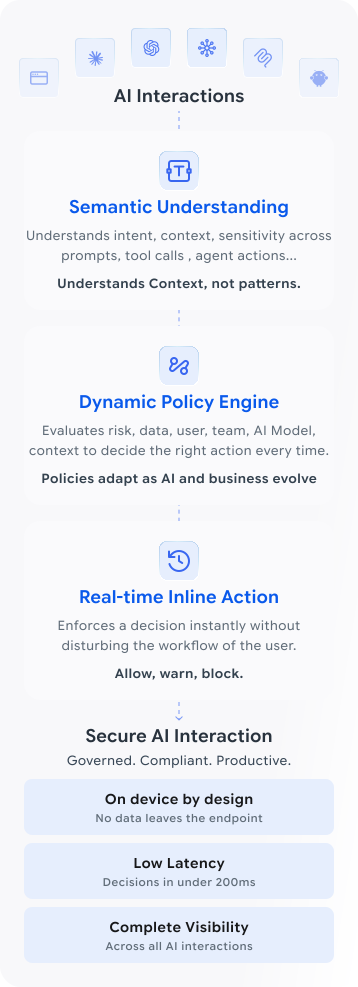
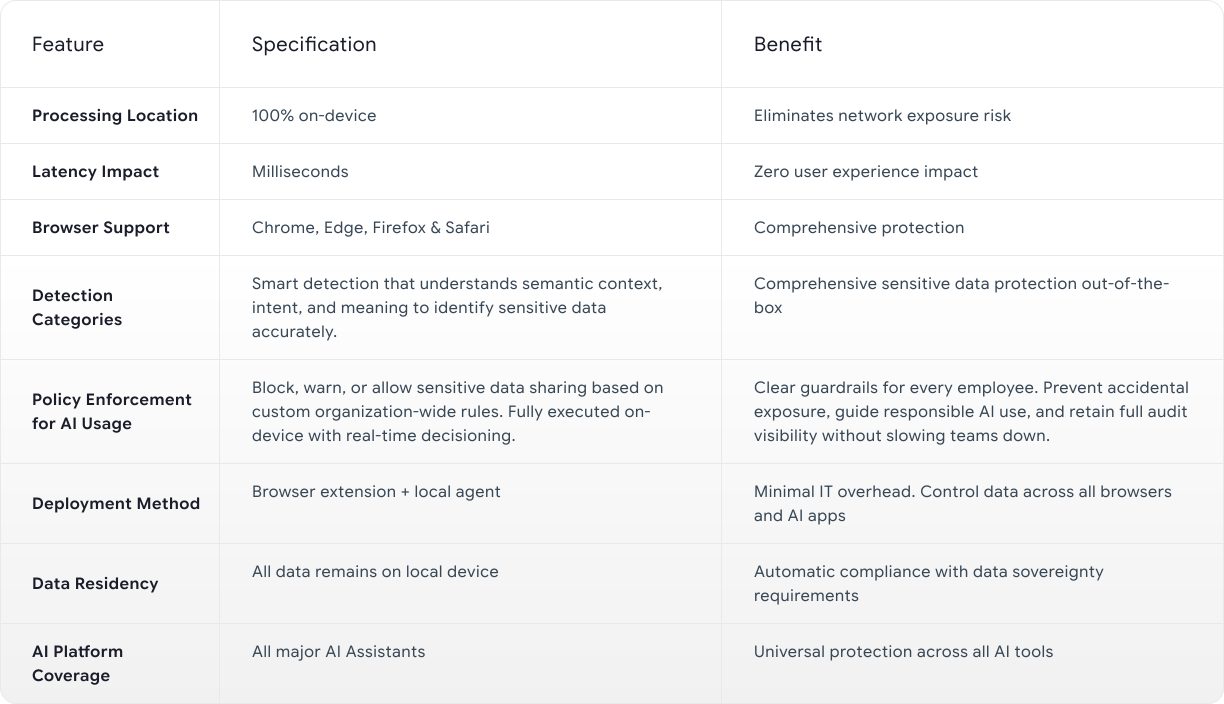
On-device DLP (Data Loss Prevention) is a security approach that detects and classifies sensitive data leakage directly at the endpoint without sending information to external servers.
Wald's on-device DLP provides:
- Local DLP model with no user visible latency
- Complete visibility into all AI interactions
- Policy enforcement at the endpoint
- No network exposure of sensitive data
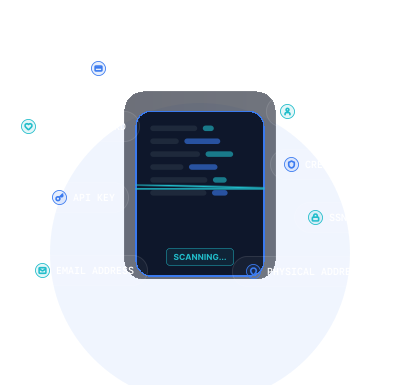
Know what’s in your data, wherever it lives.
Maintains compliance with:
Frequently Asked Questions
Contact UsHow does on-device DLP differ from traditional DLP solutions?
Traditional DLP solutions typically operate at the network level, inspecting data as it passes through gateways. This approach means data is sent to external servers. Wald's on-device DLP operates directly on the endpoint, inspecting all AI interactions locally while they're sent to AI platforms.
Can Wald’s AI DLP detect all types of sensitive data?
Yes. Wald’s AI security agent is designed to detect and classify sensitive information with high accuracy. Unlike tools that rely only on regular expression matching, it understands context and intent, which means it can identify sensitive content even if no explicit marker like a name, email address, or ID number is present.
Out-of-the-box, it recognizes PII (Personally Identifiable Information), PHI (Protected Health Information), intellectual property, source code, and can also be adapted for custom data types unique to your organization. This ensures protection not just against obvious risks, but also against subtle data exposures hidden in conversations or documents.
Can DLP monitor ChatGPT Desktop and other desktop AI applications?
Yes. Endpoint-based AI DLP can provide visibility and policy enforcement for desktop AI applications, including applications that operate outside the browser. This is important because browser-only controls can miss AI activity occurring through native desktop applications.
How does AI data observability benefit my organization?
AI data observability provides complete visibility into how AI tools are being used across your organization. This allows you to identify patterns of sensitive data sharing, understand AI usage trends, and make informed decisions about AI governance policies, all while maintaining compliance with regulations like GDPR and CCPA.