Traditional Data Loss Prevention was built for structured data, predictable workflows, and static environments.
Enterprise AI has changed all three.
As employees increasingly use ChatGPT, Claude, Gemini, Copilot, and other AI systems in daily work, security teams face a new challenge:
How do you protect sensitive information when risk exists inside prompts, context, intent, and real-time AI interactions?
This executive whitepaper explores why traditional DLP approaches struggle with AI-native workflows and how context-aware, runtime security architectures are emerging to address the gap.
Most DLP platforms were designed to identify patterns. AI interactions require systems capable of understanding context. Inside this whitepaper you’ll explore:
Why AI introduces a fundamentally different data protection challenge
The limitations of rule-based and regex-driven security models
The growing importance of contextual intelligence in AI governance
Runtime AI protection and prompt-level security controls
Emerging approaches to AI-native DLP architecture
Strategic considerations for secure enterprise AI adoption
For security leaders, the question is no longer whether employees use AI.The question is whether existing security controls were designed for how AI is actually used.
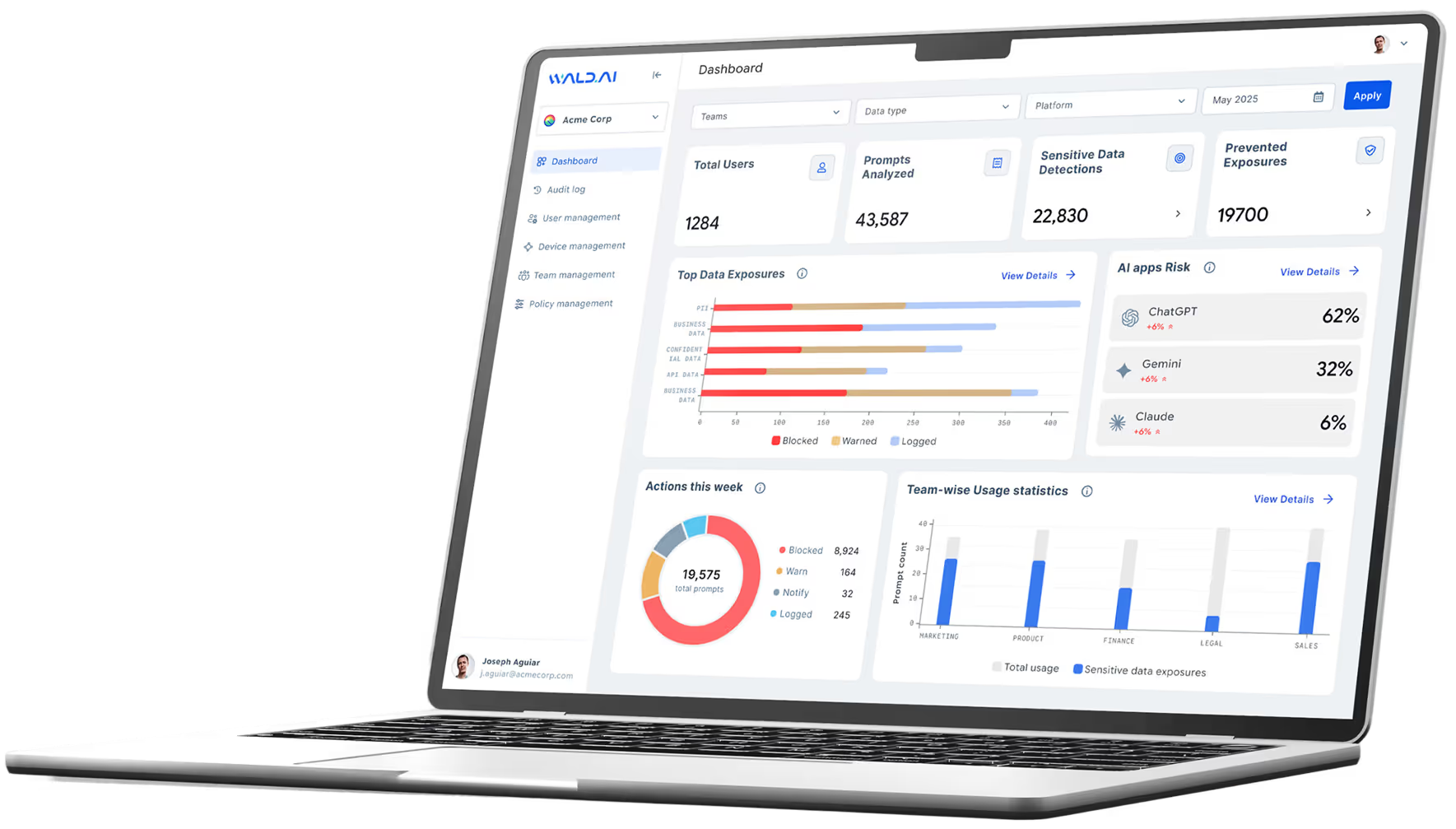
Wald.ai helps organizations govern AI adoption through contextual data protection, runtime AI security, and secure access to leading AI models.
Our platform enables enterprises to protect sensitive information, enforce security policies, and provide employees with a secure way to leverage AI without compromising productivity.

Trusted By
Regulated Organizations