An executive whitepaper on how AI-Native DLP differs from legacy DLP, and what it means for enterprise security strategy.
Download WhitepaperAI is no longer limited to experiments, it has moved into real workflows across every industry. Teams are moving fast, experimenting, deploying, and embedding it into day-to-day operations, not just pilots.
Over time, this has gone beyond simple adoption to real dependence. Companies have begun to build AI muscle across workflows and teams, while governance does the heavy lifting of keeping their data safe.
But while adoption is accelerating, the rules around it are still trying to catch up. Regulations, compliance frameworks, and internal policies are evolving in parallel, often reacting to change rather than guiding it.
And that’s where things start to get complicated.
In the United States, the pace of high-stakes innovation has pushed a more flexible, evolving approach to regulation. Companies are able to move quickly, test aggressively, and scale AI systems with fewer upfront constraints.
In the European Union, the approach is more structured. There is a stronger focus on ethical AI usage, risk classification, accountability, and clearly defined boundaries around how AI systems should be developed and deployed.
Most enterprises don’t operate in just one of these environments.
They are scaling AI across regions, teams, and use cases, while navigating very different expectations of what “responsible AI” looks like.
So the question is not just how to adopt AI.
It is how to scale it in a way that stays compliant, remains secure, and does not put governance systems under constant strain.
What does “AI transformation is a problem of governance” mean?
AI transformation becomes a problem of governance when the challenge shifts from building AI systems to managing how they are used, controlled, and scaled across an organization.
As AI moves deeper into workflows and decision-making, the complexity is no longer in accessing models or tools. It lies in managing how those systems are used, what data flows through them, and how outcomes are controlled across the organization.
It is not about the absence of AI capabilities. Most organizations now have access to increasingly powerful models, tools, and infrastructure. The challenge is ensuring that their use remains consistent, compliant, and aligned with business and regulatory expectations as adoption scales.
At a smaller scale, this is manageable. Individual teams can define their own ways of using AI, often with limited oversight and localized risk.
But as AI becomes embedded across multiple teams, use cases, and regions, those informal approaches begin to break down.
Governance, in this context, refers to the systems, policies, and controls that define how AI is used across the organization. It includes decisions around access, data usage, risk management, monitoring, and accountability.
Without these in place, AI usage expands faster than it can be controlled. Risks become harder to track, and maintaining compliance across regions and teams becomes increasingly complex.
When AI becomes transformation (not experimentation)
AI experimentation and AI transformation operate under very different conditions. During experimentation, AI is typically used in controlled environments, where use cases are limited, data exposure is contained, and the impact of outputs is often reversible. Teams can move quickly in this phase because the consequences of failure remain relatively low.
This changes as AI moves into transformation. Systems become embedded in core workflows, interact with live data, and begin to influence decisions that are harder to reverse. At the same time, usage expands across teams, tools, and use cases, increasing both dependency and risk.
The shift is not only about scale, but about exposure. Data is no longer isolated to a single workflow, outputs carry direct business impact, and AI usage extends beyond the teams that originally introduced it. What was once optional becomes part of everyday operations.
As a result, the requirements around governance change. Experimentation can function with flexibility and informal controls, but transformation requires defined ownership, enforceable policies, and consistent oversight across all use cases.
This transition marks the point where AI systems move from being tools used by teams to becoming part of the organization’s operational infrastructure.
Core components of AI Governance
AI governance is not a single system or policy. It is a combination of controls that operate across how AI is accessed, used, and monitored within an organization.
These components work together to ensure that AI systems remain secure, compliant, and aligned with business objectives as adoption scales.
AI Governance vs Compliance vs Security: How they differ
AI governance, compliance, and security are closely related, but they serve different roles within an organization. As AI systems become more embedded across workflows and regions, distinguishing between these areas becomes important for managing risk and ensuring consistent usage.
Governance defines how AI is used within the organization. It includes the policies, decision-making structures, and control mechanisms that guide usage across teams, systems, and use cases, shaping how AI is adopted and scaled.
Compliance focuses on alignment with external regulations and legal requirements. This includes adhering to data protection laws, industry standards, and emerging AI-specific regulations that vary across regions, ensuring that AI usage meets these external expectations.
Security is concerned with protecting systems and data. It includes measures such as access control, encryption, and monitoring to prevent unauthorized use, data exposure, or system misuse.
While these areas overlap, they operate at different levels. Governance provides the framework for how AI should be used, compliance ensures that this usage aligns with regulatory requirements, and security protects the underlying systems and data that AI depends on.
In practice, gaps between governance, compliance, and security are where most risks emerge. Misalignment between these areas can lead to inconsistent usage, increased exposure, and difficulty maintaining control as AI adoption scales.
Summary: Governance vs Compliance vs Security
Common breakdown points in AI governance
We’ve established above how governance challenges rarely appear as a single failure. They tend to emerge as small gaps that expand over time, especially when usage grows faster than controls.
Common breakdown points include:
- Policy vs usage gaps
Organizations may define clear guidelines for AI usage, but enforcing them consistently across teams and tools becomes difficult as adoption increases. - Lack of visibility
As AI usage spreads across workflows, it becomes harder to track where and how it is being used, making risk identification and accountability more challenging. - Data exposure risks
AI systems often interact with sensitive or regulated data across departments. Without clear controls, the risk of unintended exposure increases. - Unclear ownership
AI spans multiple functions, including product, engineering, legal, and security. This can lead to fragmented responsibility and unclear accountability. - Governance lag
AI adoption evolves quickly, while governance processes tend to move slower, creating a gap between how AI is used and how it is managed.
These issues rarely exist in isolation. As they compound over time, governance becomes harder to enforce, especially as AI becomes more deeply embedded across the organization.
AI Governance across regions: U.S. vs E.U.
AI governance requirements differ materially between the United States and the European Union, especially in how risk, accountability, and enforcement are handled.
In the European Union, AI systems are regulated through a risk-based framework. Use cases are classified based on potential impact, with stricter obligations applied to high-risk systems. These include requirements around documentation, transparency, human oversight, and ongoing monitoring. When AI systems process personal data, GDPR applies alongside AI-specific regulation, making data handling, consent, and purpose limitation critical considerations.
For organizations, this means AI systems must be designed with traceability, auditability, and clear controls from the outset. Decisions made by AI systems need to be explainable, and the use of sensitive data must be tightly governed.
In the United States, governance is less centralized. Instead of a single regulatory framework, expectations are shaped by a combination of state laws, sector-specific regulations, and federal guidance. The focus is increasingly on preventing harm, particularly in areas such as algorithmic discrimination, data misuse, and consumer protection.
For CISOs and CTOs, this creates a different set of requirements. Rather than adhering to a uniform standard, organizations need to track evolving obligations across jurisdictions, implement risk management practices, and ensure that AI systems do not introduce legal or reputational exposure.
For enterprises operating across both regions, governance needs to support both models simultaneously. Systems must be capable of enforcing stricter controls where required, while still allowing flexibility in environments with fewer predefined constraints.
This makes governance less about policy definition and more about execution. The ability to control data access, monitor usage, and maintain auditability across systems becomes essential for operating AI at scale across regions.
How enterprises implement AI Governance (step-by-step)
Implementing AI governance is not a one-time setup. It evolves as AI adoption expands across teams, tools, and regions. In practice, organizations move through a series of steps that establish visibility, define accountability, and ensure that policies are not only documented, but enforced.
1. Identify AI use cases
The starting point is understanding where AI is actually being used. This goes beyond officially approved tools and includes team-level adoption, experimental workflows, and external tools that may not be centrally tracked.
Without a clear inventory of use cases, governance remains incomplete. Organizations need visibility into how AI is being applied, what systems it interacts with, and what type of data is involved.
2. Classify risk levels
Once use cases are identified, they need to be evaluated based on risk. Systems that process sensitive data, influence decisions, or interact with customers require a higher level of oversight than low-risk internal use cases.
Risk classification allows organizations to apply governance selectively. Instead of treating all AI usage the same, controls can be aligned with the potential impact of each use case.
3. Define enforceable policies
Policies need to go beyond documentation. It is not enough to define what AI usage should look like, organizations need to ensure that these rules can be applied consistently in practice.
This includes defining boundaries around data usage, acceptable workflows, model selection, and required levels of human oversight, in a way that can be translated into actual system behavior.
4. Assign ownership
AI governance requires clear accountability. Each use case or system should have defined ownership, whether at the team or organizational level.
This ensures responsibility for maintaining compliance, managing risk, and responding to issues. Without clear ownership, governance gaps tend to persist, especially as usage expands across functions.
5. Enforce controls at the system level
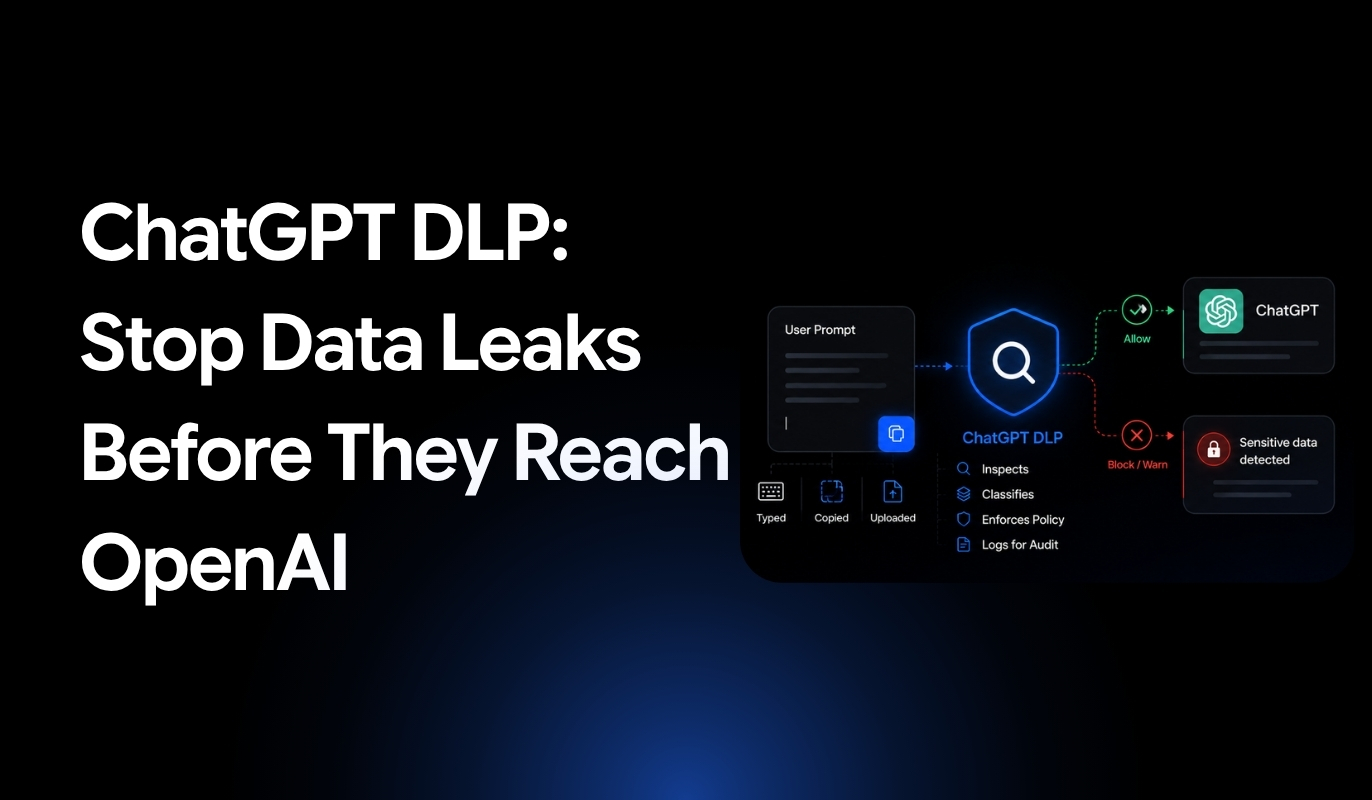
The biggest gap in AI governance is often between policy and enforcement. Controls need to exist within the systems where AI is being used, not just in documentation or guidelines.
This includes managing access, restricting how data is used, and applying safeguards such as data redaction, prompt-level controls, and usage boundaries directly within AI workflows.
Platforms like Wald operate at this layer, helping organizations enforce policies in real time by controlling how sensitive data is handled and how AI systems are accessed.
6. Monitor usage and detect gaps
As AI adoption grows, continuous monitoring becomes essential. Organizations need visibility into how AI is being used across teams, including identifying patterns that fall outside defined policies.
This also includes detecting unapproved or “shadow” AI usage, where teams may adopt external tools without formal oversight, increasing the risk of data exposure or inconsistent practices.
7. Audit, adapt, and close the loop
Governance needs to operate as a continuous loop. Monitoring should feed back into policy updates, control improvements, and risk reassessment.
Regular audits help identify gaps between expected and actual usage, allowing organizations to refine their governance approach as new tools, regulations, and use cases emerge.
Over time, this creates a system where governance evolves alongside AI adoption, rather than falling behind it.
AI Governance Checklist: What’s Your Score?
AI governance frameworks are only effective when they are enforced consistently across systems, not just defined in policy. This checklist can be used to assess whether governance is operationalized in practice.
Governance readiness checklist
☐ 1. AI usage across teams and tools is visible, including both approved and unapproved (“shadow AI”) usage
☐ 2. AI use cases are categorized based on risk, with stricter controls applied to high-impact and sensitive workflows
☐ 3. Data access within AI workflows is controlled, with safeguards in place to prevent exposure of sensitive or regulated data
☐ 4. Controls are enforced at the system level (e.g., input restrictions, redaction, access boundaries), not just defined in policy
☐ 5. Usage of external AI tools, APIs, and models is tracked and governed
☐ 6. AI systems interacting across regions account for differing regulatory requirements (e.g., EU vs US expectations)
☐ 7. Monitoring provides real-time visibility into how AI systems are being used across workflows and teams
☐ 8. Unusual or non-compliant usage patterns can be detected and flagged early
☐ 9. High-risk outputs are validated or reviewed before being acted upon
☐ 10. Audit logs capture AI usage, including data interactions and system-level actions
☐ 11. Governance systems can adapt as new tools, models, and use cases are introduced
Governance maturity scoring
Use the checklist above to assess your current level of AI governance maturity:
- 0–3 checks → AI usage is largely uncontrolled. Governance is not operationalized, and risks are likely unmonitored.
- 4–7 checks → Basic governance is in place, but gaps exist in enforcement, visibility, or consistency across teams.
- 8–11 checks → Governance is operational and enforced across most systems, with strong visibility and control mechanisms in place.
If you’re below 8, governance is likely not keeping pace with AI adoption.
Conclusion
For CISOs and CTOs, AI adoption is no longer a tooling decision. It is a control problem.
AI is already in use across teams, often beyond sanctioned tools and without centralized visibility. The challenge is not introducing new systems, but bringing existing usage under control.
This comes down to three things: who owns each use case, what data is exposed, and whether that activity can be monitored and audited in real time.
Governance, in this context, is not a framework layered on top. It is part of the infrastructure that determines whether AI usage can be secured, standardized, and scaled.
Without that, AI continues to expand, but outside defined boundaries.
And once usage moves beyond sanctioned tools without visibility or control, risk is no longer theoretical.
FAQs
What does it mean that AI transformation is a problem of governance?
It means the primary challenge is no longer building AI systems, but controlling how they are used at scale. As AI expands across teams and workflows, organizations must manage data access, enforce usage boundaries, and maintain visibility, making governance the limiting factor in successful AI transformation.
Why do AI initiatives fail without governance at scale?
AI initiatives often fail when usage grows faster than controls. Without governance, organizations face fragmented adoption, unmonitored data exposure, inconsistent outputs, and difficulty maintaining compliance, especially when teams use AI outside sanctioned tools.
What changes when AI moves from experimentation to transformation?
During experimentation, AI use is limited, controlled, and low-risk. In transformation, AI becomes embedded in core workflows, interacts with live data, and influences decisions, requiring enforceable controls, defined ownership, and continuous monitoring to manage risk.
How should CISOs and CTOs approach AI governance operationally?
CISOs and CTOs should focus on visibility, control, and enforcement. This includes identifying all AI usage (including shadow AI), applying system-level controls on data and access, monitoring usage in real time, and ensuring that all AI activity is auditable across systems and regions.
How do global regulations like the EU AI Act impact enterprise AI governance?
Regulations such as the EU AI Act require organizations to classify AI systems by risk and implement controls around transparency, documentation, and oversight. For enterprises operating globally, this means governance systems must adapt to different regulatory requirements while maintaining consistent control across environments.
What is the biggest gap in current AI governance practices?
The biggest gap is the disconnect between policy and enforcement. Many organizations define AI governance policies, but lack the systems to enforce them in real time, especially across multiple tools, teams, and external AI platforms.