
%20(1).avif)
An executive whitepaper on how AI-Native DLP differs from legacy DLP, and what it means for enterprise security strategy.
Download Whitepaper1. How ChatGPT Handles Your Company Data
Employees rely on ChatGPT to summarize reports, review code, draft emails, and analyze documents. While it improves productivity, many users assume their conversations remain private. That assumption can create significant ChatGPT privacy risks for organizations.
When an employee submits a prompt to ChatGPT, the information is transmitted to OpenAI’s infrastructure for processing. Unless your organization has implemented appropriate enterprise controls, sensitive business information leaves your managed environment the moment it is submitted.
This data may include customer information, financial records, source code, intellectual property, contracts, or confidential business strategies. Without centralized visibility and governance, security teams cannot determine what information has been shared, who shared it, or whether it complies with internal AI governance policies.
For organizations adopting generative AI, understanding how ChatGPT handles company data is the first step toward reducing enterprise AI risk.
2. ChatGPT’s 30-Day Data Retention Policy Explained
OpenAI states that chats may be retained for up to 30 days to detect abuse and maintain service integrity. During this period, prompts, responses, and uploaded content may remain on OpenAI’s systems before deletion, subject to applicable policies and legal obligations.
For organizations evaluating ChatGPT privacy, this raises important questions about data retention, regulatory obligations, and ownership of sensitive information. Once company data is submitted to a public AI assistant, organizations have limited visibility into how long it is retained or under what circumstances it may be preserved.
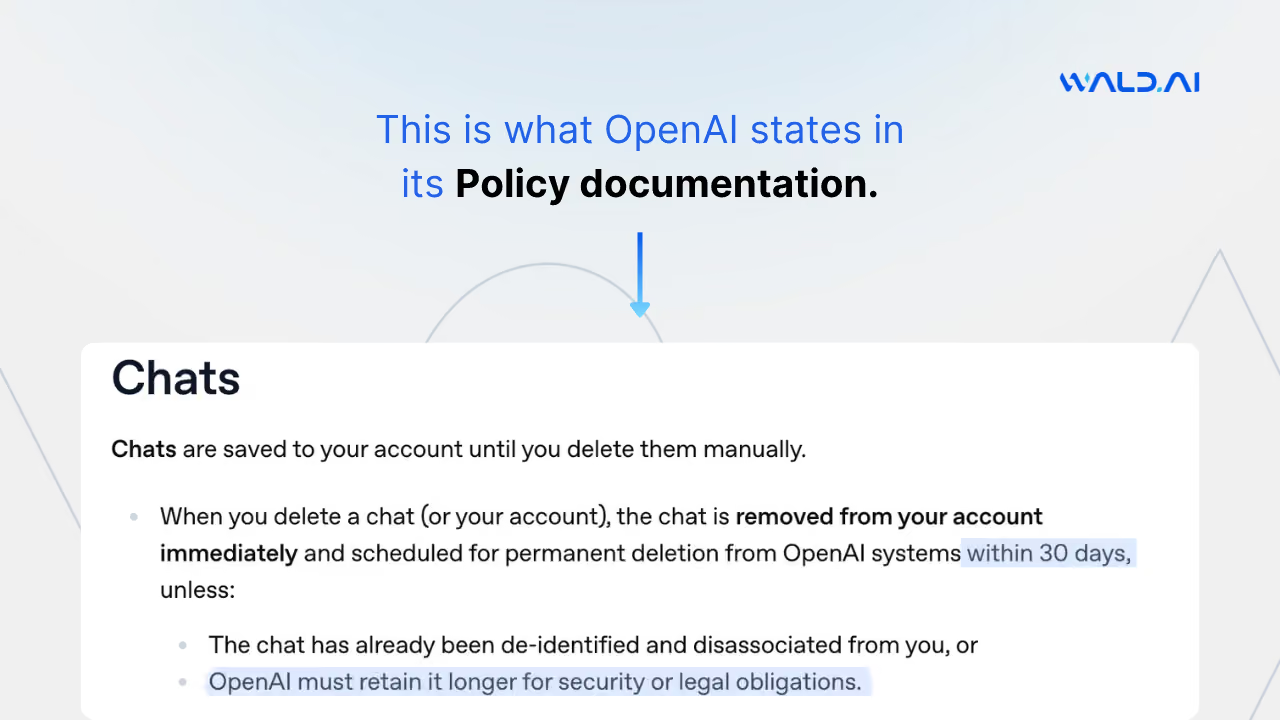
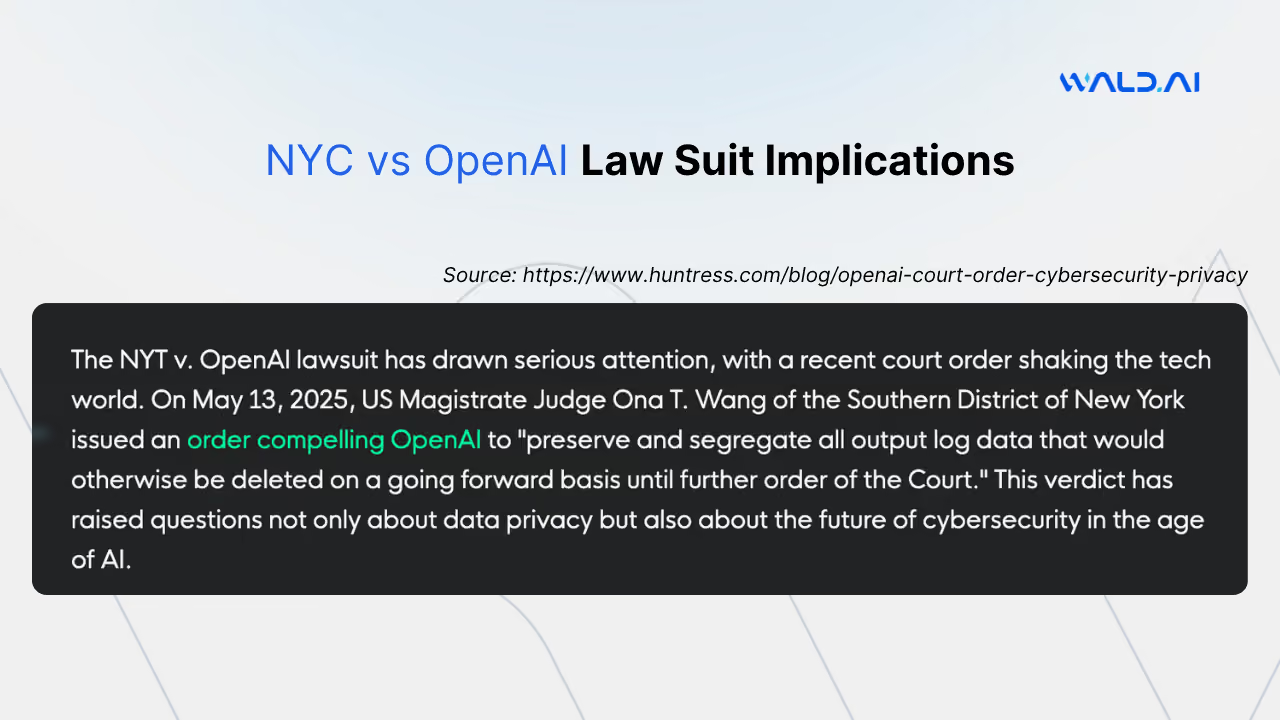
Recent legal proceedings have further highlighted these concerns. In response to court orders related to ongoing litigation, OpenAI has been required to preserve certain user data beyond standard retention periods. This demonstrates that legal requirements may override default deletion timelines in specific situations.
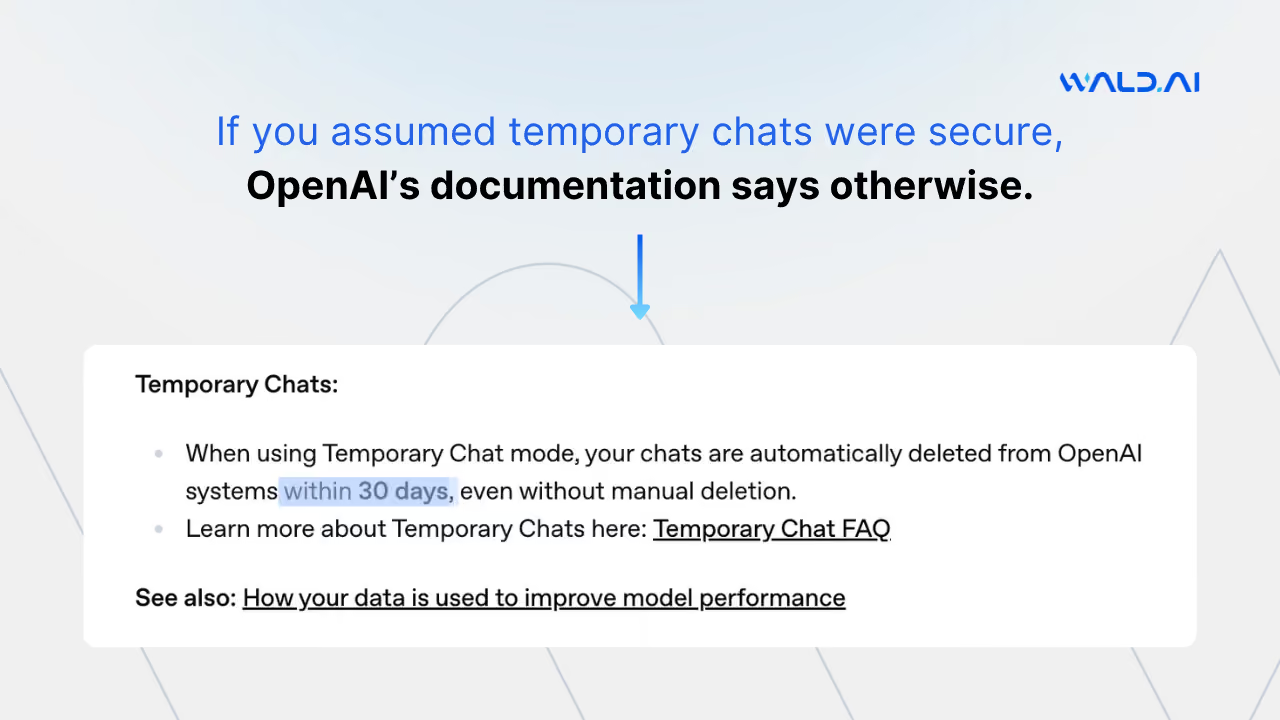
In fact, the NYC lawsuit against OpenAI forced the company to retain user data for legal reasons. So even if you delete your chat, it’s still there somewhere, held in compliance limbo.
That’s not hypothetical risk. That’s a live copy of your internal data sitting outside your control for 30 days straight.
For security and compliance teams, the challenge extends beyond the retention period itself. Once sensitive company data is shared with a public AI platform, organizations no longer have complete control over its lifecycle.
3. AI Data Storage: Security Vulnerabilities and Breach Risks
Every external platform that stores business data represents an additional security consideration. While major AI providers invest heavily in cybersecurity, organizations should still evaluate the risks associated with transmitting confidential information outside their own controlled environments.
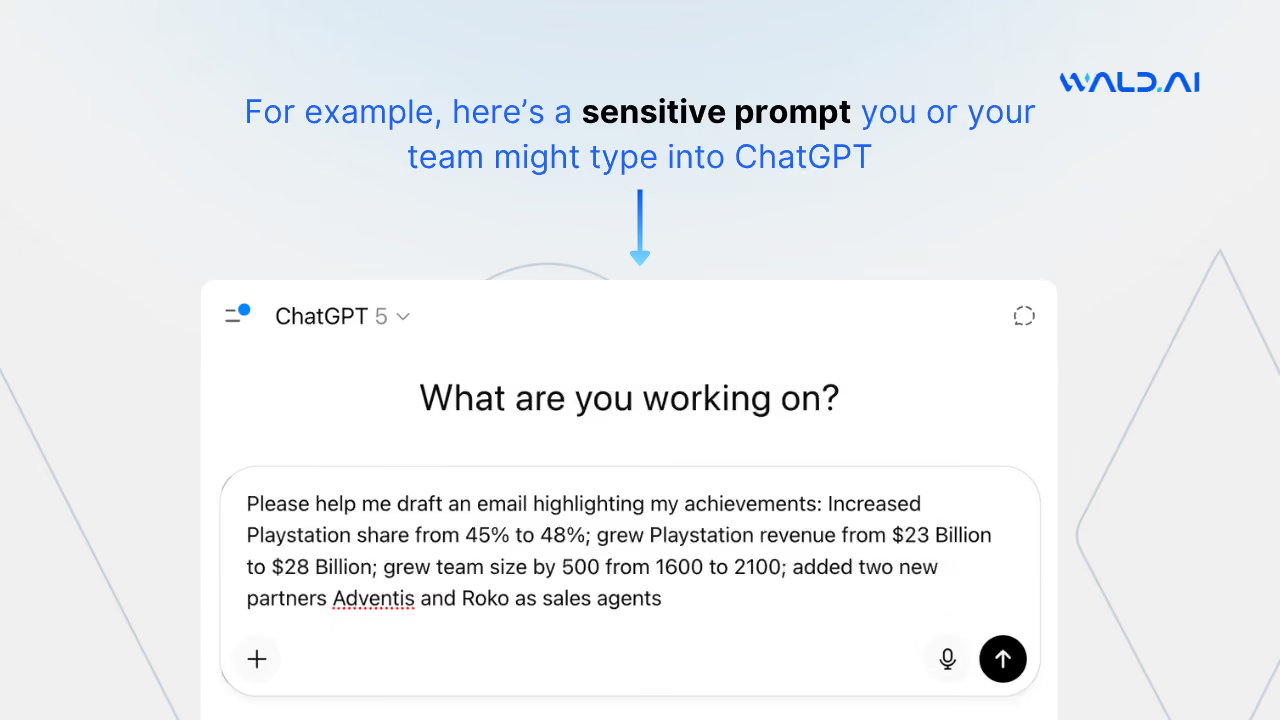
Employees may unknowingly submit customer records, internal documents, proprietary source code, financial data, or product roadmaps to public AI assistants. If organizations lack visibility into these interactions, they cannot accurately assess their exposure or respond effectively to potential incidents.
This is one of the primary reasons why ChatGPT privacy has become an enterprise security priority. The challenge is not simply whether AI platforms are secure. It is whether organizations know what sensitive information is being shared and whether appropriate controls exist before that data leaves the enterprise.
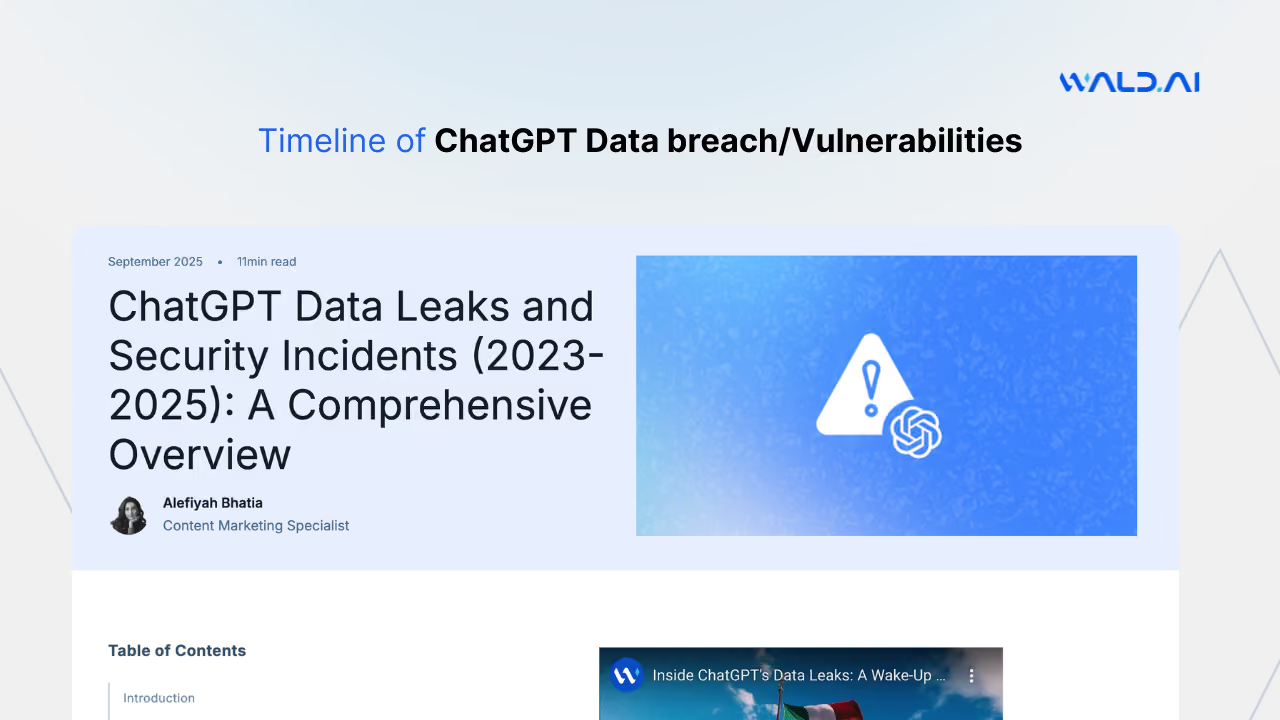
We’ve compiled a list of ChatGPT vulnerabilities here.
4. ChatGPT Compliance Challenges: GDPR, HIPAA, and SOC 2
Regulations such as GDPR, HIPAA, and SOC 2 require organizations to demonstrate appropriate controls over sensitive information, including how data is processed, stored, accessed, and protected.
As employees increasingly use public AI assistants, maintaining those controls becomes more challenging. Organizations must understand what information is being submitted, whether regulated data is involved, and how those interactions align with internal security and compliance requirements.
While AI providers publish privacy commitments and security documentation, enterprises remain responsible for protecting their own data and meeting regulatory obligations. Compliance cannot rely solely on vendor policies. It requires technical controls, auditability, and enforceable AI governance across the organization.
For CISOs and compliance teams, balancing employee productivity with regulatory requirements has become one of the most important aspects of enterprise AI governance.
5. Shadow AI: Why Blocking ChatGPT Increases Security Risks.
Many organizations respond to ChatGPT privacy concerns by blocking access to public AI tools altogether.
In practice, this often produces the opposite outcome. Employees continue using AI through personal devices, unmanaged browsers, or alternative AI applications that operate outside corporate visibility.
This behavior, commonly referred to as shadow AI usage, creates a larger security challenge. Instead of governing AI adoption, organizations lose the ability to monitor how sensitive information is being shared and which AI services employees are using.
Effective AI governance is not about preventing AI adoption. It is about enabling secure, compliant AI usage while maintaining visibility, policy enforcement, and data protection across every interaction.
6. AI Data Loss Prevention: A Modern Approach to GenAI Security
Organizations should not have to choose between protecting sensitive data and enabling employees to use AI. Effective AI governance makes it possible to adopt AI securely without disrupting productivity.
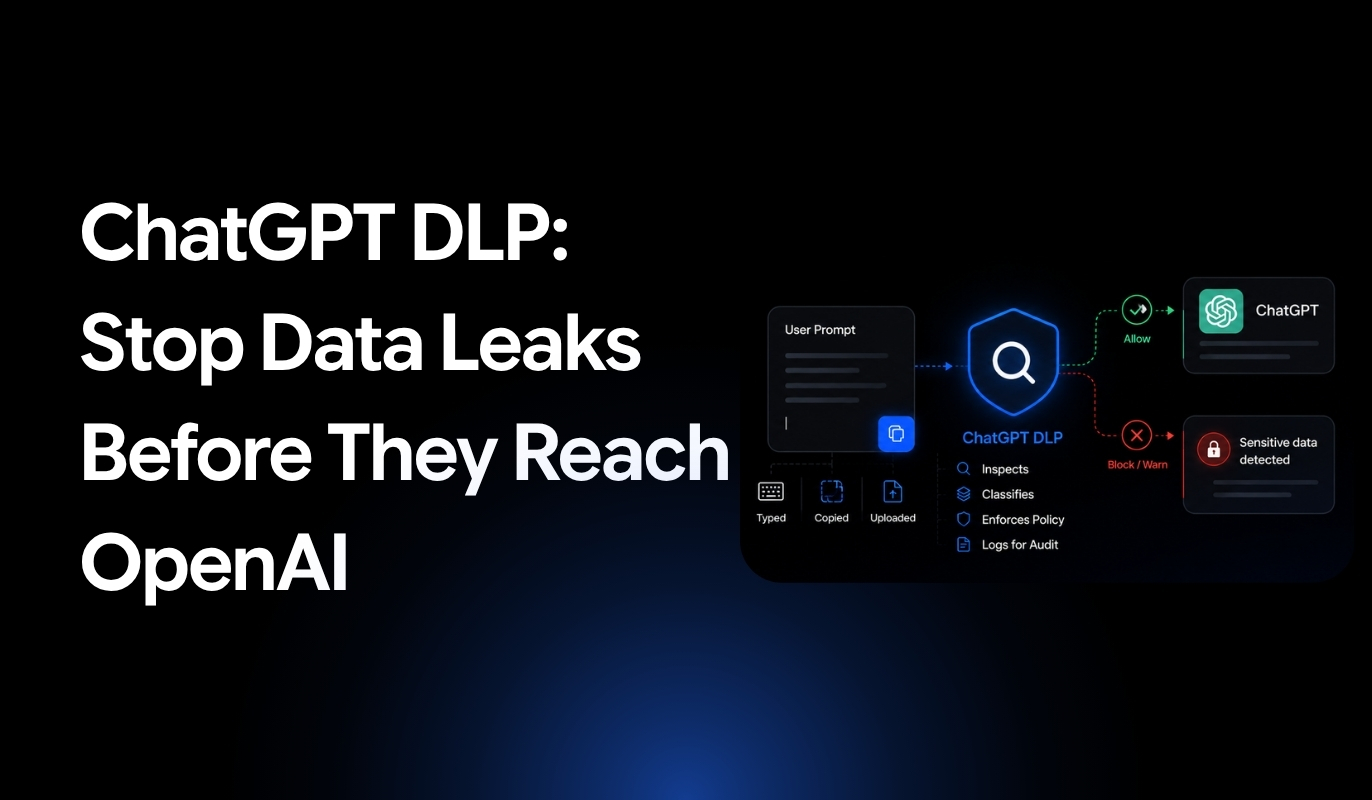
Wald AI DLP enables employees to continue using ChatGPT, Claude, Gemini, and other public AI assistants while protecting sensitive company information before it reaches the model.
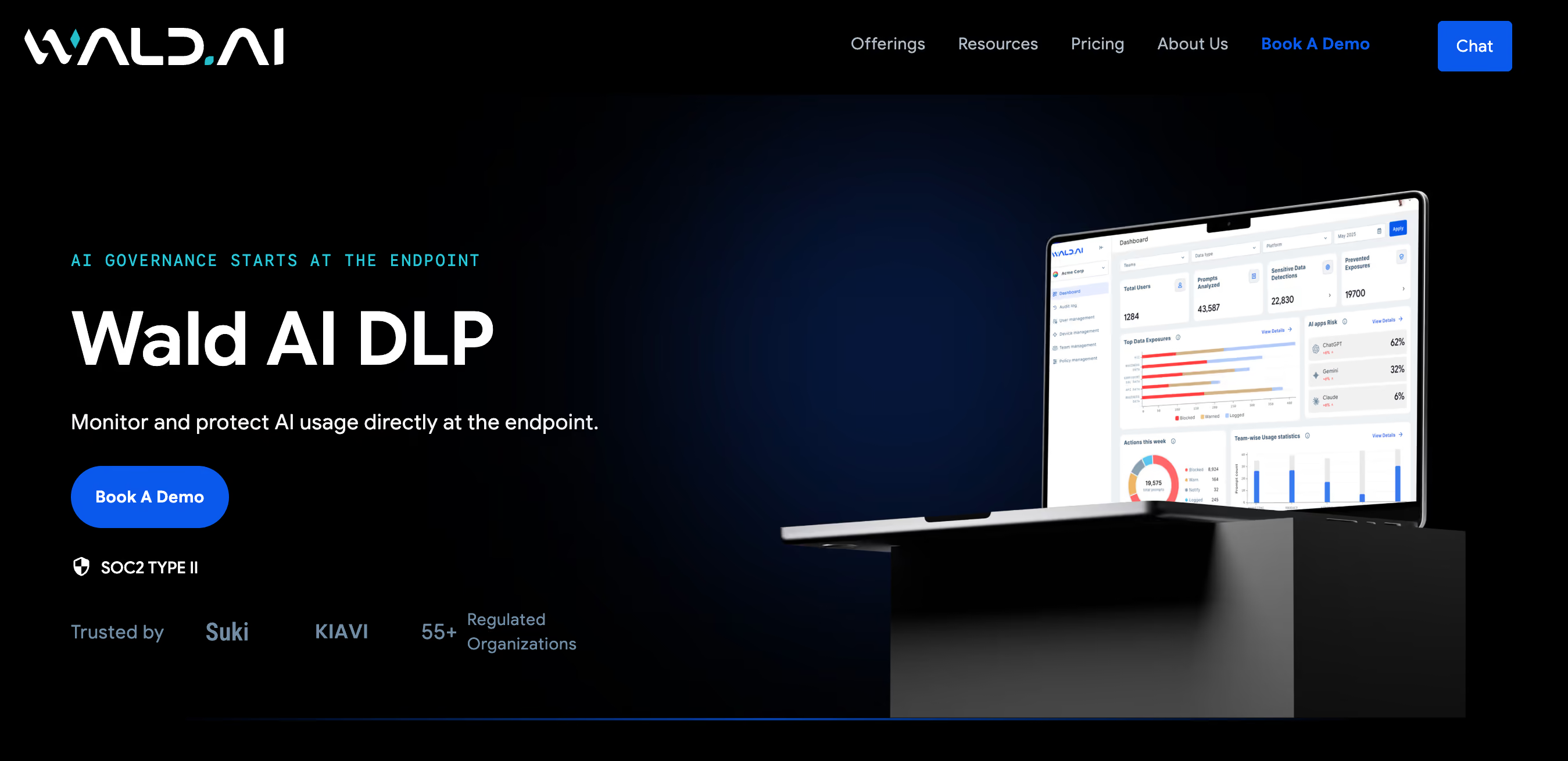
Every prompt is analyzed in real time using contextual AI Data Loss Prevention. Unlike traditional DLP solutions that rely on static rules, keywords, or regular expressions, Wald AI DLP understands the context of each prompt. This significantly reduces false positives and prevents legitimate AI usage from being unnecessarily blocked.
Administrators can configure policies using Wald’s built-in data classifications to determine what types of information should be protected. When sensitive data such as customer records, financial information, source code, intellectual property, or regulated data is detected, organizations can choose to block, redact, anonymize, or sanitize the content before it is sent to the AI model.
Wald AI DLP also extends beyond standalone AI assistants through its MCP gateways. As AI becomes embedded across business applications, development tools, productivity platforms, and enterprise software, the same contextual protection is applied to AI interactions within those tools. This ensures employees can benefit from AI wherever they work while preventing sensitive company data from being shared with external models.
This approach enables organizations to implement AI governance consistently across their AI ecosystem. Instead of relying on rigid policies that generate excessive alerts or forcing employees toward shadow AI usage, Wald AI DLP provides contextual protection that secures sensitive data while preserving a seamless AI experience.
7. Implementing AI Governance: Next Steps for Enterprise Security
Generative AI is becoming part of everyday business operations. The objective is no longer to stop employees from using AI. It is to ensure AI usage is secure, compliant, and aligned with organizational policies.
Strong AI governance combines visibility, policy enforcement, data protection, and continuous monitoring. Organizations should know what information is being shared with AI systems, whether it contains sensitive data, and how those interactions are governed across the enterprise.
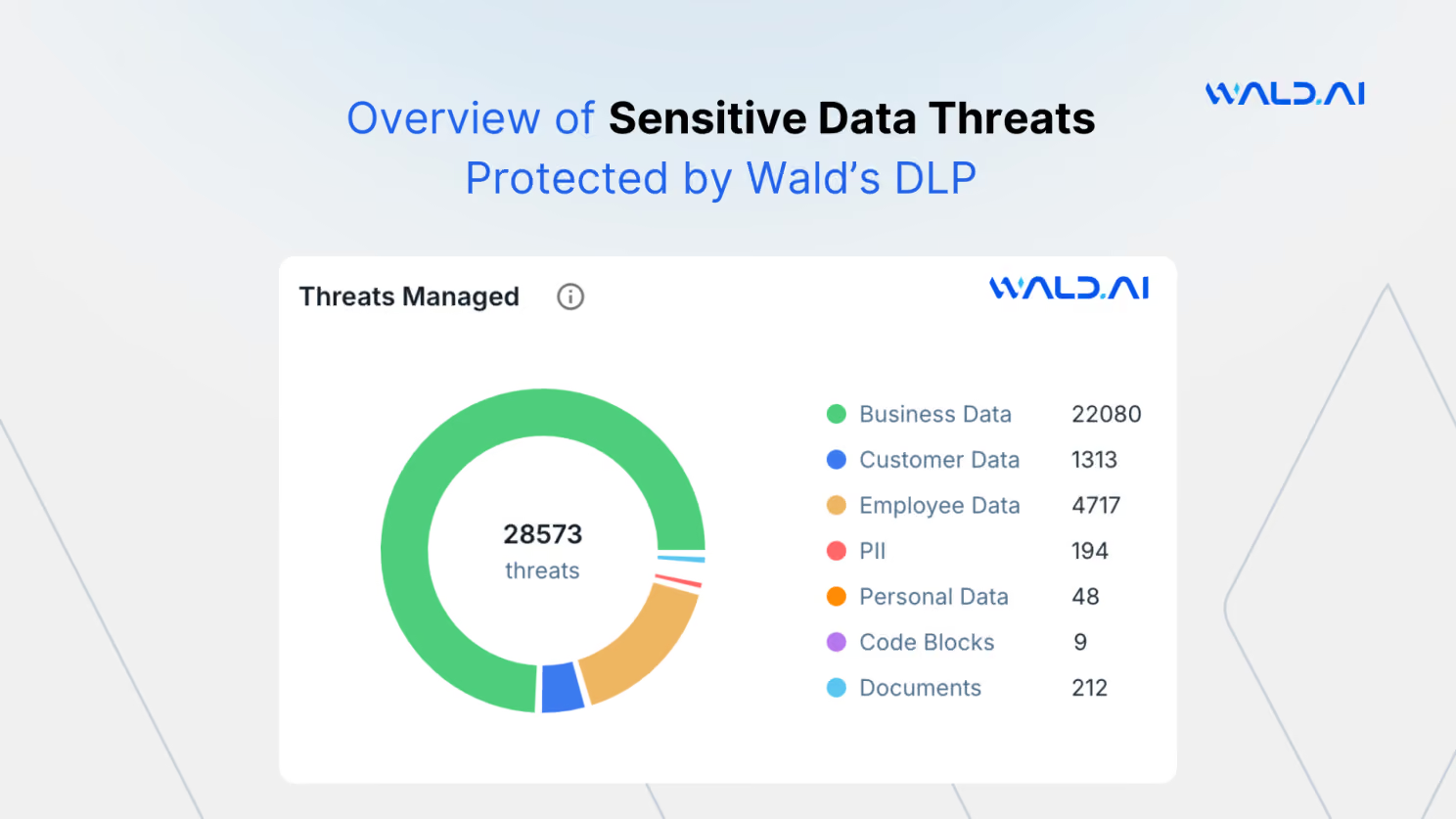
Before employees use ChatGPT or any other public AI assistant, ask a simple question:
Do you know what sensitive company data is leaving your organization, and do you have the controls to protect it?
If the answer is no, implementing AI governance and contextual Data Loss Prevention should be a priority for every enterprise adopting generative AI.