
Blog H1: Harmonic Security Alternatives: AI DLP Tools Compared (2026)
TL;DR
- Harmonic Security is a strong visibility-first AI governance platform with shadow AI discovery, SLM-based detection, and an MCP gateway.
- Wald AI is the top alternative for regulated teams: its AI DLP provides on-device, contextual inspection of prompts and sensitive data before they leave the endpoint, with granular policies for controlling what users can share across AI tools and LLMs.
- Wald’s Secure AI Workspace complements its DLP offering, giving teams a secure way to adopt and use leading LLMs through a single governed environment.
- Prompt Security suits teams building AI apps; WitnessAI suits network-first security stacks.
- Microsoft Purview suits Microsoft 365 shops; Nightfall AI suits broad SaaS DLP programs.
- Harmonic Security vs Wald: Wald combines contextual AI DLP with domain-specific detection and controls, while its Secure AI Workspace provides a governed way to use multiple LLMs securely.
If you are searching for Harmonic Security alternatives, you have already accepted that AI needs its own controls. Wald AI, Prompt Security, WitnessAI, Microsoft Purview and Nightfall AI are the five competitors most security teams shortlist against Harmonic, and each solves a different version of the problem.
Harmonic Security alternatives at a glance
Why teams look beyond Harmonic Security
Harmonic has earned its reputation. It discovers shadow AI, shows which departments use which tools, scores AI apps by their data-training terms, and coaches employees before they share sensitive data. Its small language models run on the endpoint and classify prompts in under 200 milliseconds.
Teams usually move on for one of five reasons, not because Harmonic is weak:
- Blocking and coaching are not enough. They want the prompt sanitized and still answered, not stopped.
- Prompt content must not leave their environment. Harmonic classifies on the endpoint, but its platform also offers a full prompt audit log with regional data hosting. Some teams need prompts kept out of any vendor's cloud.
- They need more than governance. Some want a secure workspace with approved LLMs built in.
- They are building AI, not just using it. Application-layer guardrails matter more than employee monitoring.
- AI is one part of a larger DLP program. SaaS, email and cloud storage need the same policy engine.
The category is also shifting. Buyers now expect AI security to understand meaning, cover desktop apps and agents, and keep productivity intact. That raises the bar for every platform on this list, Harmonic included.
How we evaluated the alternatives
We scored each platform on the questions that decide real deployments:
- Where is sensitive data inspected? On the device, in the browser, at a proxy, or in a vendor cloud.
- What reaches the vendor afterward? Even tools that classify locally may send prompt text or snippets to their console for logging.
- What happens after detection? Monitor, warn, block, redact, or redact and restore.
- Which AI surfaces are covered? Browser tools, native desktop apps, IDE assistants, agents and MCP servers.
- Does it understand context? Pattern matching floods analysts with false positives on unstructured prompts.
- Does it fit your architecture? Endpoint agent, extension, network proxy or native suite.
- Can it prove compliance? HIPAA, GDPR, CCPA, GLBA and SOC 2 evidence for auditors.
The 5 best Harmonic Security alternatives in 2026
1. Wald
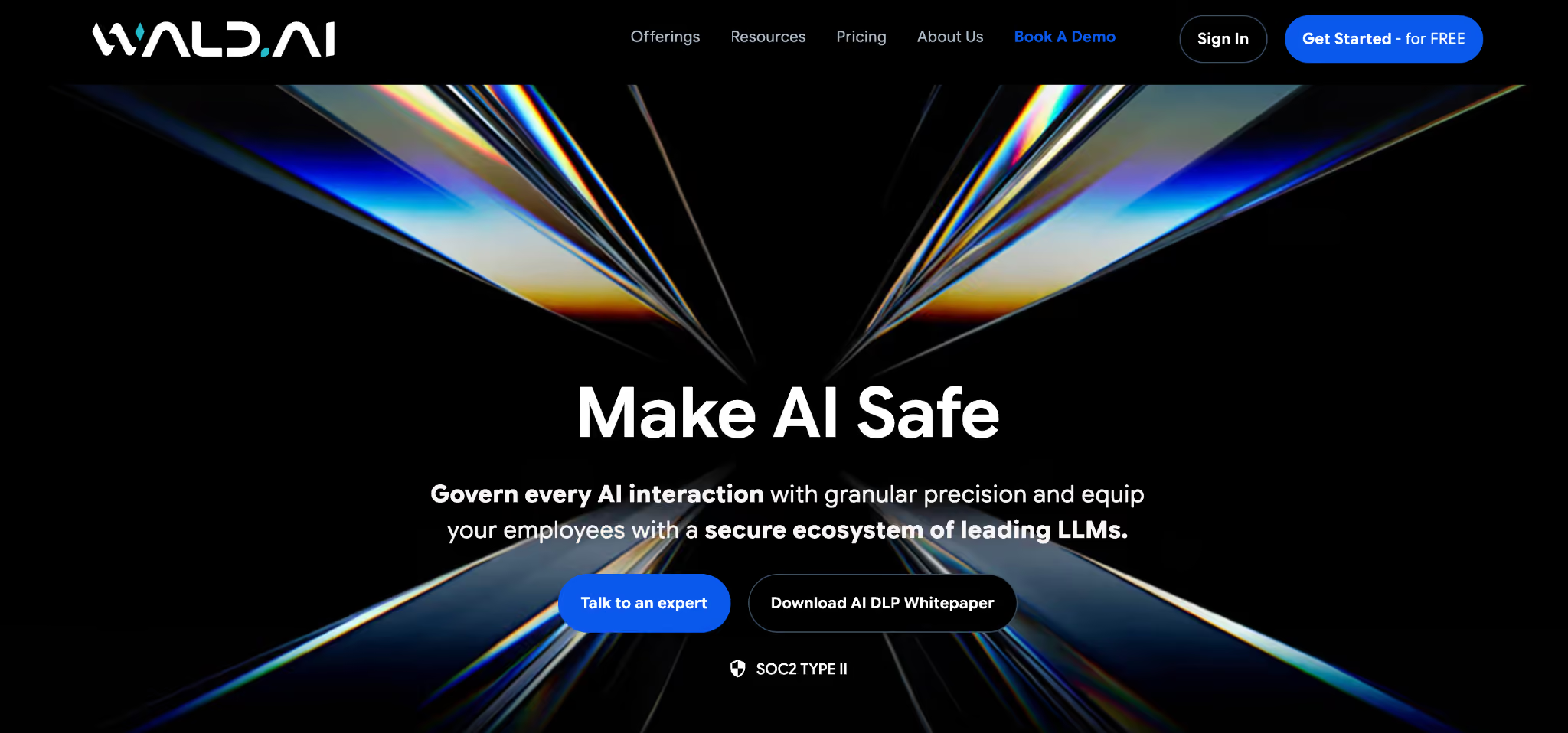
Best for: Mid-sized and large enterprises in financial services, credit unions, insurance, healthcare, life sciences, legal and government that want employees using AI freely without sensitive data reaching public models.
Wald AI DLP provides context-aware, on-device protection across AI tools and apps. For a more compliant employee experience, pair it with the LLM pack to give users safe access to top LLMs and seamlessly switch between models.
Key features
- Semantic detection: catches IP, inside information and other 55+ data types in context which regex misses
- Custom models: an auto-training pipeline builds domain-specific DLP models
- Inline enforcement: blocks in real time, unlike compliance APIs that only log
- Audit dashboard: shows which users, AI tools and policies were triggered
- Agent coverage: MCP gateway and agent-to-agent governance
- Compliance: SOC 2 Type II, HIPAA, GDPR, CCPA and GLBA, plus a free POC
2. Prompt Security
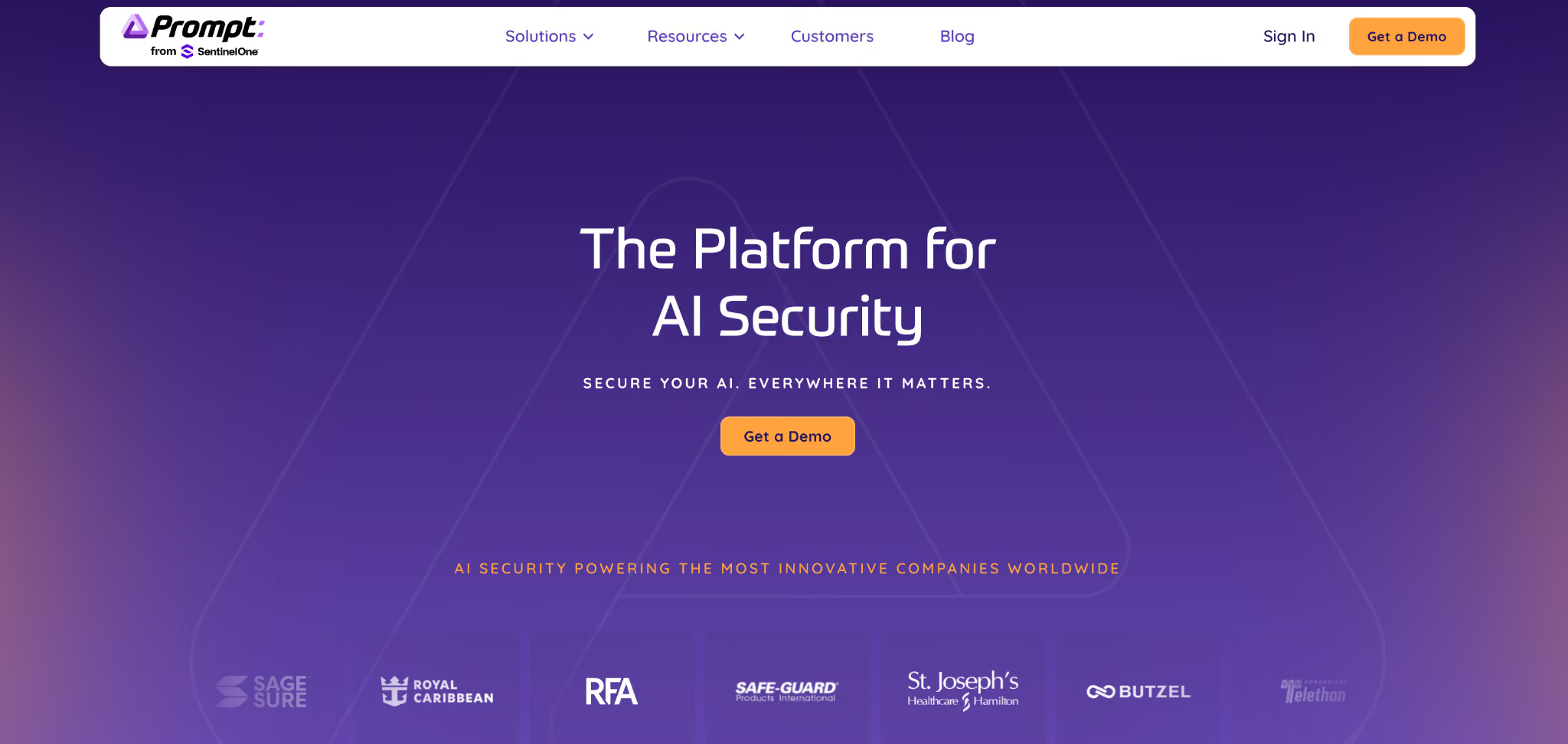
Best for: DevSecOps teams securing LLM applications, code assistants and agents they build.
Prompt Security covers employee AI activity with a browser extension and an endpoint agent for desktop, terminal and agentic tools, and can block risky prompts or redact sensitive data in real time. It also protects AI at the application layer with runtime guardrails, prompt-injection and jailbreak defense, PII detection and output filtering. It also discovers shadow AI and secures coding assistants such as GitHub Copilot. Choose it when API traffic and application behavior matter more than day-to-day employee prompts.
Watch out for: Inspection runs through Prompt Security's service, available as SaaS or on-premises. Confirm which deployment you would get and what prompt data it retains. Prompt Security has been part of SentinelOne since September 2025 (SEC filing), so roadmap and packaging may follow that platform.
Key features
- Browser extension and endpoint agent with real-time redaction
- Prompt-injection protection
- Shadow AI discovery
- Code assistant secrets protection
- MCP server risk ranking
3. WitnessAI
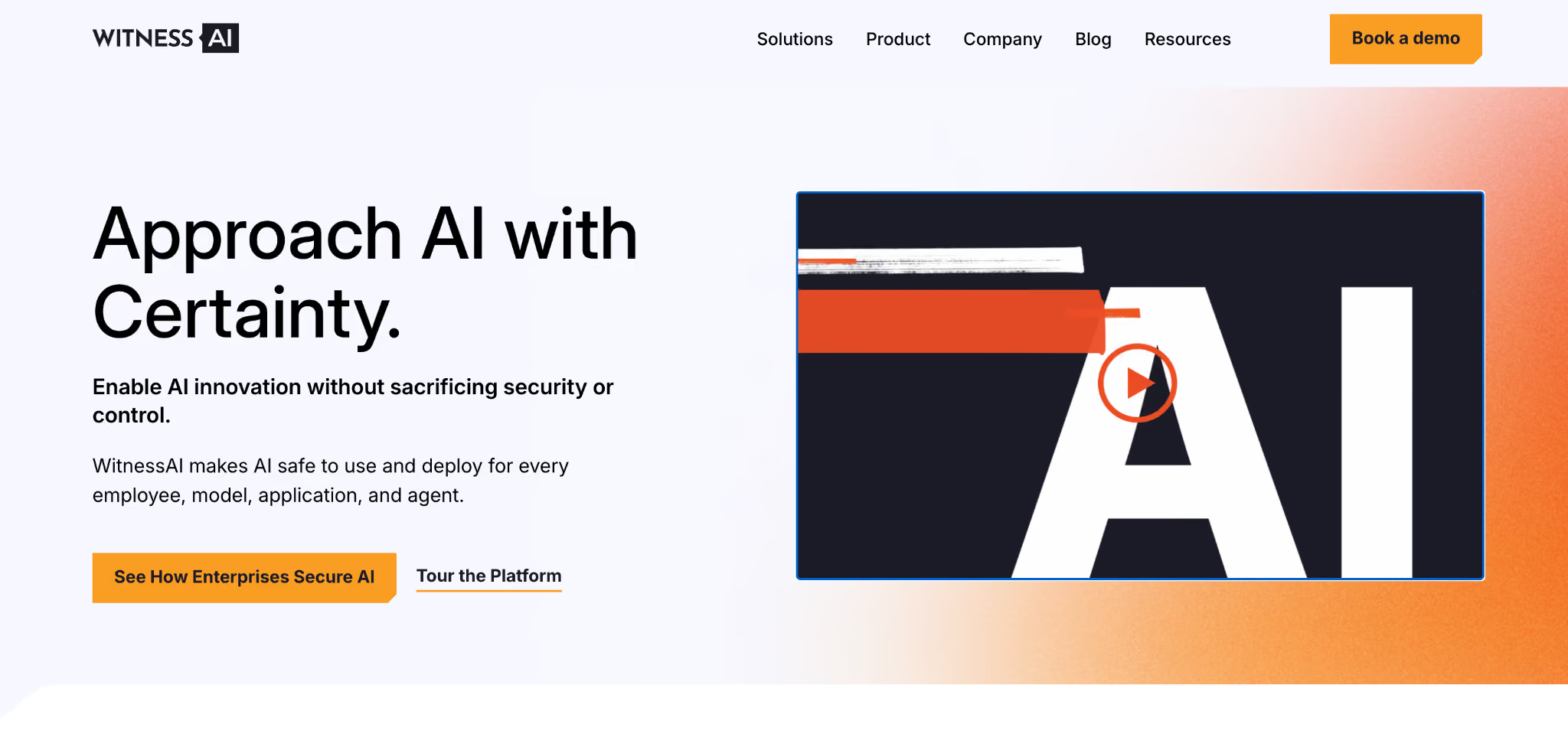
Best for: Large enterprises with mature security stacks that want AI governance to slot into existing network controls.
WitnessAI sits in the network rather than on the browser or endpoint. It gives visibility, intent-based classification and runtime policy across employee AI use, models, agents and MCP servers, and can route requests to approved models by risk. Because it sees traffic rather than browser pages, it covers native desktop copilots and IDEs as well as web AI. Each customer runs in a single-tenant environment with customer-held encryption keys.
Watch out for: Network-first deployment works best when traffic already flows through controlled infrastructure. Remote and unmanaged devices, and native desktop AI apps, can be harder to see, and rollout typically involves more coordination with network teams than an endpoint agent does.
Key features
- Network-level AI visibility
- Intent-based classification
- Agent tool-access governance
- Risk-based model routing
- Single-tenant deployment with customer-held keys
4. Microsoft Purview
Best for: Microsoft-first enterprises governing Microsoft 365 Copilot.
Microsoft Purview extends sensitivity labels, DLP and insider risk management to Copilot inside the Microsoft ecosystem. It needs no extra vendor, but its AI controls lean on labels and rules, and coverage thins outside Microsoft tools.
Watch out for: Most employees use AI tools Microsoft does not own. If your teams work in ChatGPT, Claude or Gemini alongside Copilot, Purview alone leaves gaps, and advanced AI features often sit behind E5 or add-on licensing.
Key features
- Data security posture management
- Insider risk management
- Sensitivity labels and encryption
- Copilot-specific DLP policies
5. Nightfall AI
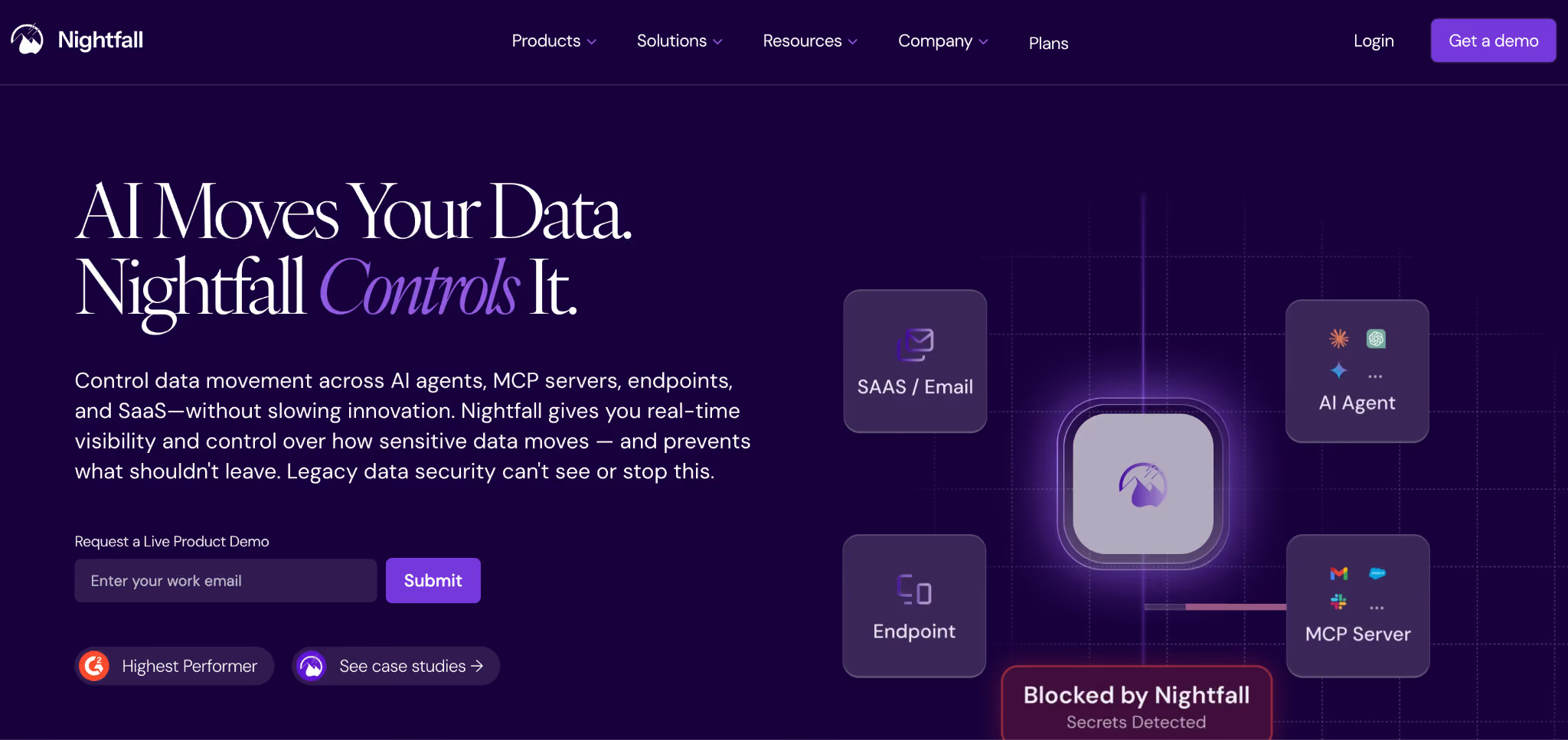
Best for: Cloud-native teams that want AI controls inside one SaaS, email and endpoint DLP platform.
Nightfall AI combines machine-learning detection with data lineage across SaaS apps, email, browsers, endpoints and AI tools, and added AI agent and MCP security in 2026. It suits teams treating AI as one channel in a broader data protection program. See our full Nightfall alternatives comparison.
Watch out for: Nightfall's detection engine is delivered as a cloud service, so ask exactly where prompt content is processed. For teams with strict data residency rules, whether sensitive text leaves the device during inspection is often the deciding question.
Key features
- AI data lineage
- Automated remediation
- AI agent and MCP discovery
- API-based SaaS integrations
Harmonic Security vs Wald: side-by-side comparison
Harmonic Security and Wald both reject regex-only DLP and run context-aware small language models at the endpoint. The difference is what happens after detection and how far the platform reaches beyond governance.
Pick Harmonic if your first question is what AI your workforce uses and why. Pick Wald if your first question is how employees keep using AI without sensitive data ever leaving the device.
Deployment is similar for both. Each installs through standard MDM tools such as Intune or Jamf, and each can run in observe-only mode before enforcement. The practical test is to run the same set of real prompts through both and compare what reaches the model and what the employee receives back.
How to choose the right alternative
- Sensitive data must stay on the endpoint: Wald AI.
- You build AI applications: Prompt Security.
- Governance must live in the network: WitnessAI.
- You run on Microsoft 365: Microsoft Purview.
- AI is one channel of a broader DLP program: Nightfall AI.
Run a proof of concept with your own prompts. Measure false positives, employee friction and what reaches the model.
A useful checklist for that trial: confirm where each prompt is inspected, test at least one unstructured prompt with no obvious identifiers, check coverage for the desktop AI apps your teams actually run, and ask for audit evidence you can hand to compliance. The platform that passes all four with the least friction is usually the right one.
FAQs
What are the best Harmonic Security alternatives?
The top Harmonic Security alternatives are Wald AI, Prompt Security, WitnessAI, Microsoft Purview and Nightfall AI. Wald AI leads for on-device AI DLP and contextual redaction, Prompt Security for AI applications, WitnessAI for network-level governance, Purview for Microsoft 365, and Nightfall for broad SaaS DLP.
Who are Harmonic Security's main competitors?
Harmonic Security competes with AI DLP and governance vendors including Wald AI, Prompt Security, WitnessAI, Nightfall AI, LayerX, Cyberhaven and Microsoft Purview.
How does Harmonic Security compare to Wald?
Both use context-aware small language models at the endpoint. Harmonic leads with visibility and coaching. Wald adds contextual redaction with rehydrated responses, custom domain-specific DLP models built through an auto-training pipeline, and a secure AI workspace.
Does Wald send prompts to the cloud for inspection?
No. Wald's endpoint SLM inspects prompts on the device and enforces policy before anything is sent. In the Secure AI Workspace, only the sanitized prompt reaches the LLM, under contractual zero data retention.
Is Wald a good fit for HIPAA or GDPR compliance?
Yes. Wald detects PHI and personal data in prompts and files, redacts it before it reaches an external model, and logs policy actions for audit.
Can Wald run alongside existing DLP tools?
Yes. Many teams run Wald for AI prompts and agents while keeping their existing DLP for email, SaaS and cloud storage.
Is a provider compliance API enough to secure ChatGPT or Claude?
No. Compliance APIs log what users have already sent. Wald enforces policy inline, so a sensitive prompt is blocked or sanitized before it reaches the model.
What is the difference between traditional DLP and AI DLP?
Traditional DLP inspects email, file transfers and cloud storage using patterns. AI DLP inspects prompts, uploads and agent actions in context, before data reaches a model.