Secure Every AI interaction

Semantic DLP for Enterprise AI

Understand sensitive data by its meaning, context, and intent. Wald’s Semantic DLP detects sensitive information across prompts, file uploads, MCP communications, agent-to-agent traffic, and every AI interaction in real time.

On device Semantic DLP | <100ms latency
Book a demo
SOC2 TYPE II

Trusted by

55+

Regulated
Organizations

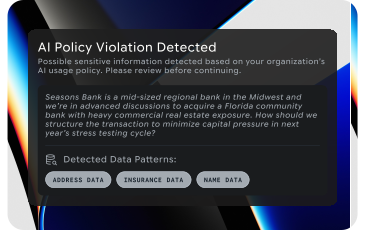
Illustration of Wald AI DLP inspecting prompts, file uploads, MCP gateway traffic, agent-to-agent communication, and AI tool interactions before enforcing security policies.

What Secure AI Looks Like In Practice

Inside the moment these leaders finally felt confident putting AI in the hands of their people.

See It In Action

Our goal was to enable broad access to top AI tools and LLMs without the friction of competing platforms, bans, or invasive oversight. Wald delivered exactly that. By securely detecting and sanitizing sensitive data in real time, Wald allows our employees to use leading LLMs safely and efficiently. It has streamlined workflows, enhanced visibility into AI usage across the credit union, and provided deep insights through its data classification capabilities.

Chris Chatelain
Chris Chatelain

Vice President of Information Security at EFCU Financial

As AI usage grew across our credit union, we needed to maintain visibility, protect member data, and ensure compliance without slowing employees down. Wald.ai helped us do exactly that. The platform gives us clear insight into AI usage, flags sensitive information, and uses data masking to protect workflows—making oversight significantly easier. This allows our team to securely use different LLMs for their daily needs, boosting productivity while maintaining strict security and governance controls.

Ryan Caruthers
Ryan Caruthers

Director of Information Security & ISO at OUCU Financial

Wald has made using AI much easier for our teams. Having access to multiple leading LLMs through a single secure platform means employees can use the right model for the job without juggling multiple subscriptions. The built-in data sanitization and centralized audit logs give us the confidence to adopt AI while supporting our security, governance, and compliance requirements

Jon Scottorn giving a review for Wald AI DLP
Jon Scottorn

AVP of Technology, Partner
Colorado Credit Union

Wald.ai with its contextual intelligence addresses a significant need in sanctioned company wide use of generative AI.It offers a thoughtful approach to securing employee AI conversations and safeguarding sensitive private data and our intellectual property

Fatima Afzal

Senior Director Marketing & Comms @PayActiv

It offers a thoughtful approach to securing employee AI conversations and safeguarding sensitive private data and our intellectual property

Donovan Bray

Director of DevOps @Kiavi

Wald enables our employees to safely leverage leading AI models so they can reduce the time they spend on manual tasks. Our traditional DLP was built for email and file transfers and not AI prompts. Wald gave us real visibility and control over how our employees use LLMs without slowing productivity.

Jonathan Antonio

Vice President of Infrastructure @Suki

Ensuring that internal sensitive data remains protected while leveraging AI has significantly enhanced the efficiency and accuracy of legal work without compromising confidentiality or privilege.

Rick Borden

Partner, Data Strategy, Privacy and Cybersecurity in New York, and former Assistant General Counsel at a top 5 US bank.

Govern Every AI Interaction
With Confidence

Beyond Pattern Matching

Beyond Pattern Matching

Traditional DLP relies on patterns, keywords, and predefined rules. Semantic DLP understands the meaning and context of data to identify sensitive information that traditional detection can miss.

Zero Alert Fatigue

Zero Alert Fatigue

Semantic intelligence helps distinguish genuine data exposure risks from harmless interactions, reducing false positives and unnecessary alerts.

Flexible Policy Enforcement

Flexible Policy Enforcement

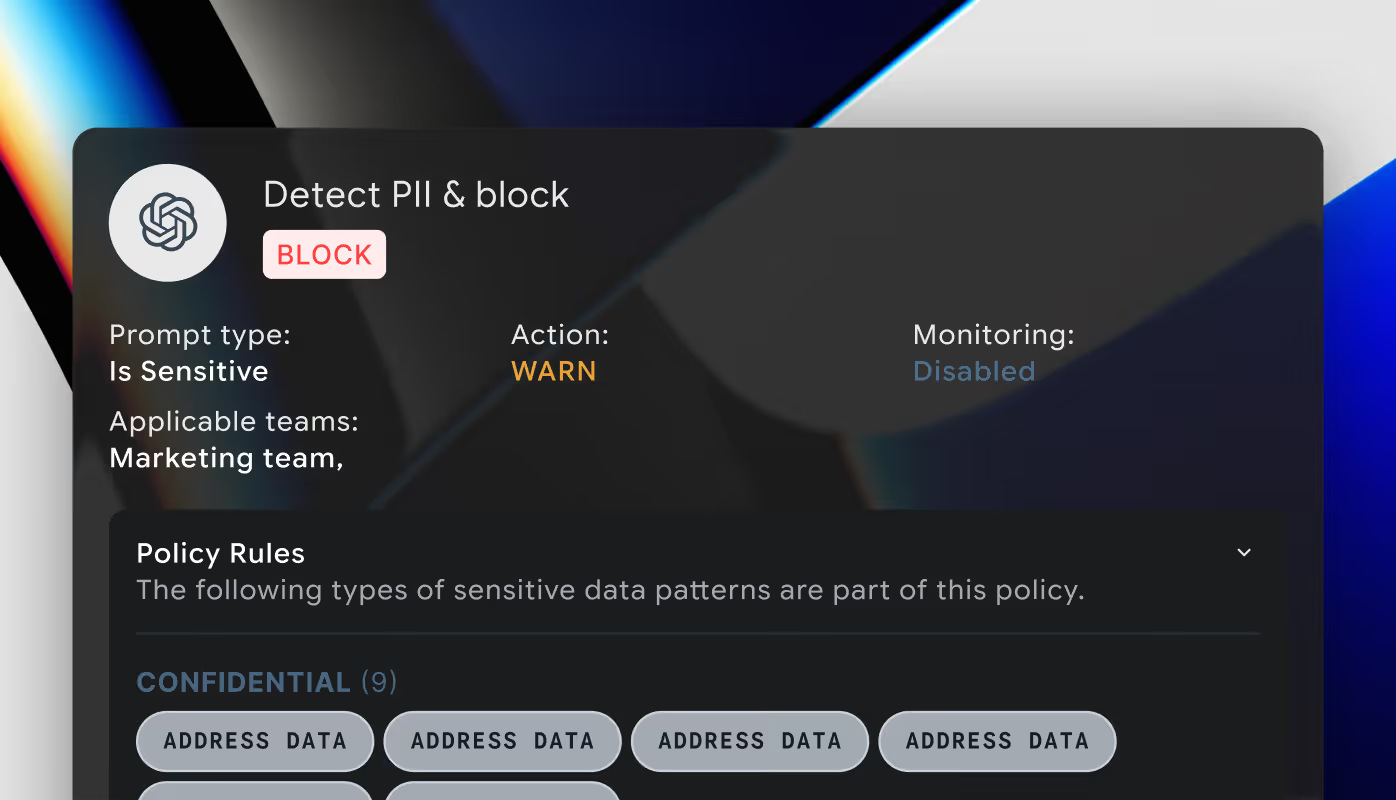
Create policies based on the sensitivity and context of an interaction. Allow, monitor, warn, or block AI usage in real time.

What is Semantic DLP?

Semantic DLP is an AI-powered approach to data loss prevention that understands the meaning, context, and intent of information, rather than relying only on patterns, keywords, or predefined rules.Wald’s Semantic DLP brings contextual intelligence directly to the endpoint, allowing organizations to understand and control sensitive data across AI interactions before that data reaches external AI services.

ondevice dlp for ai

Wald's Semantic DLP provides:

  • Context-aware detection beyond pattern matching
  • Complete visibility into all AI interactions
  • Policy enforcement at the endpoint
  • No network exposure of sensitive data
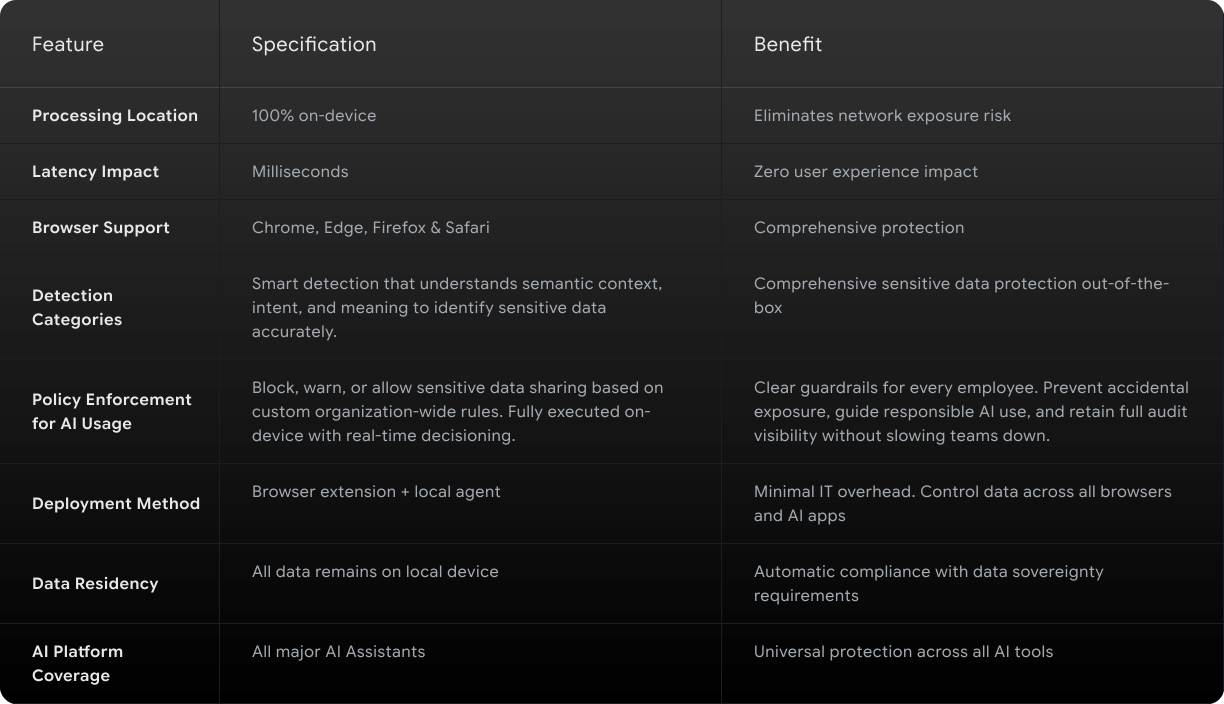
ai-dlp-feature-table

What This Means for Your Organization

01
Regulatory Compliance

Apply contextual data protection controls across AI usage to help support your organization’s compliance requirements.

02
Complete Visibility

Understand what AI tools employees are using, what information they are sharing, and where sensitive data is being exposed.

03
Productivity Unleashed

Let employees use AI tools productively while applying security controls in the background.

04
Risk Mitigation

Detect and prevent sensitive data exposure before information reaches AI applications and services.

wald-ai-dlp

Maintains compliance with:

HIPPA
GDPR
CCPA
GLBA

Frequently Asked Questions

Contact Us

What is Semantic DLP?

Semantic DLP uses AI to understand the meaning, context, and intent of data when identifying potential sensitive information. Unlike traditional DLP approaches that primarily rely on patterns and predefined rules, Semantic DLP can evaluate the broader context of an interaction.

How does Semantic DLP differ from traditional DLP solutions?

Traditional DLP commonly uses patterns, keywords, regular expressions, and predefined policies to identify sensitive data. Semantic DLP adds contextual intelligence to understand what the data means and how it is being used.

How do you set up context-aware DLP with AI?

Context-aware DLP uses AI models to analyze the meaning and context of an interaction and classify whether the information represents a potential data security risk. Policies can then determine whether to allow, monitor, warn, or block the interaction.

How can AI reduce DLP false positives?

AI can evaluate information in context instead of treating every matching pattern as sensitive. This can help distinguish legitimate activity from genuine data exposure and reduce unnecessary alerts.

‍

Which DLP approach works best for AI usage?

AI agents can access multiple applications, retrieve enterprise data, and act across systems, creating new paths for sensitive information to move beyond traditional IAM and DLP controls. Organizations need AI-native security that monitors AI interactions and enforces policies in real time. Wald AI DLP helps secure AI agents by applying policy enforcement across enterprise AI usage.

What DLP controls are effective for AI usage?

Effective AI DLP combines context-aware policy enforcement, user and application-based access controls, real-time prompt inspection, audit logs, and AI usage visibility. These controls help organizations protect sensitive data while enabling employees to use AI tools securely. Wald AI DLP brings these capabilities together to help enterprises adopt AI without compromising security.

How does DLP help secure AI tools like Microsoft Copilot?

DLP helps secure AI tools like Microsoft Copilot by enforcing policies on the data employees share with AI. It prevents sensitive information from being exposed, provides visibility into AI usage, and helps organizations meet security and compliance requirements. Wald AI DLP extends these protections across multiple enterprise AI tools from a single policy layer.

What is DLP in AI?

AI DLP (Data Loss Prevention) protects sensitive enterprise data when employees use AI tools like ChatGPT, Claude, Gemini, and Microsoft Copilot. Unlike traditional DLP, AI DLP understands the context of AI interactions and applies intelligent policy enforcement to reduce data leakage without slowing down productivity. Wald AI DLP helps organizations adopt AI securely across their enterprise.

How can AI help with DLP investigations?

Since AI can understand the context and intent behind user activity, it helps security teams investigate DLP incidents more efficiently. AI can identify why a policy was triggered, distinguish genuine risks from benign activity, and prioritize high-risk events, reducing manual investigation time. Wald AI DLP provides visibility into AI usage and policy enforcement, helping organizations investigate potential data exposure faster.

Can Wald’s AI DLP detect all types of sensitive data?

Yes. Wald’s AI security agent is designed to detect and classify sensitive information with high accuracy. Unlike tools that rely only on regular expression matching, it understands context and intent, which means it can identify sensitive content even if no explicit marker like a name, email address, or ID number is present.

‍

Out-of-the-box, it recognizes PII (Personally Identifiable Information), PHI (Protected Health Information), intellectual property, source code, and can also be adapted for custom data types unique to your organization. This ensures protection not just against obvious risks, but also against subtle data exposures hidden in conversations or documents.

How does AI data observability benefit my organization?

AI data observability provides complete visibility into how AI tools are being used across your organization. This allows you to identify patterns of sensitive data sharing, understand AI usage trends, and make informed decisions about AI governance policies, all while maintaining compliance with regulations like GDPR and CCPA.