Claude DLP for Preventing Employee AI Data Exposure
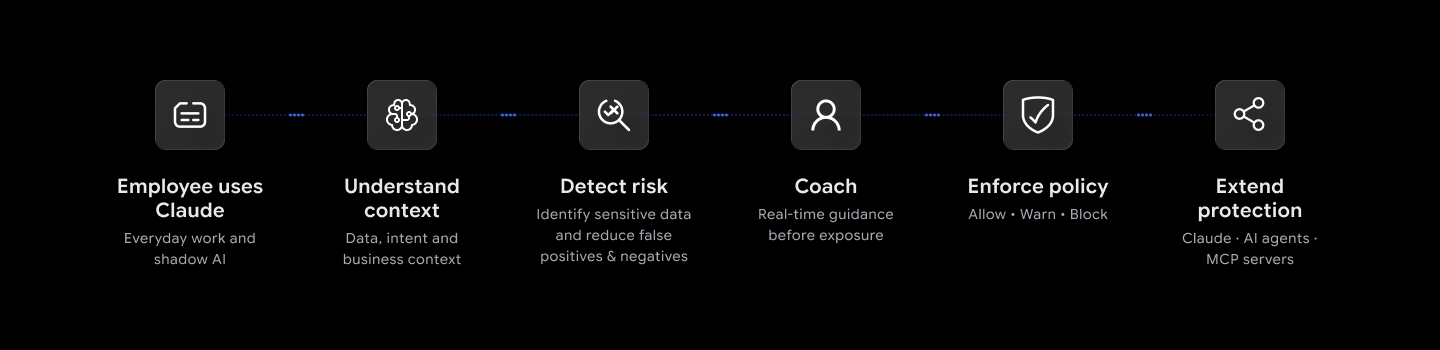
As employees bring Claude into everyday work, enterprise security needs to address what goes into every interaction. Detect sensitive data, understand context, and enforce policies on-device.

Maintains compliance with:
Understand what employees share with Claude
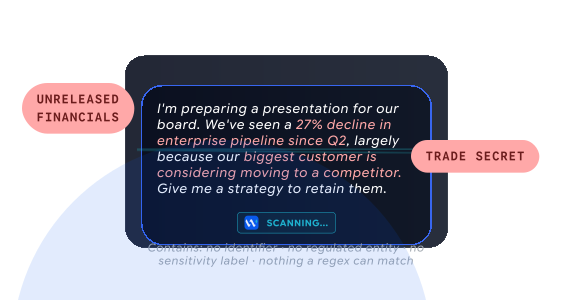
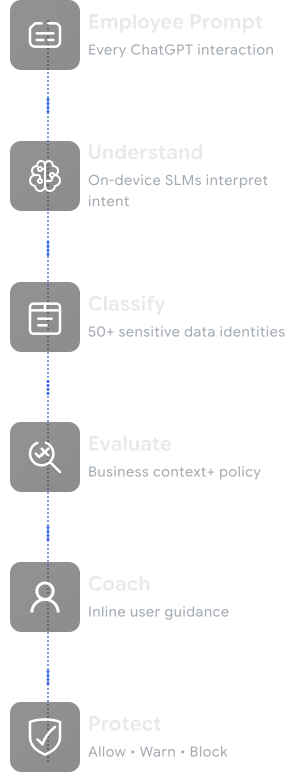
On-device SLMs understand sensitive data in the context of every Claude interaction.
- Go beyond pattern matching
- Semantic understanding
- Real-time user coaching
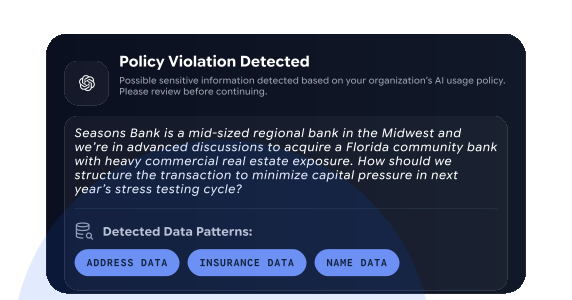
Stop risky Claude interactions
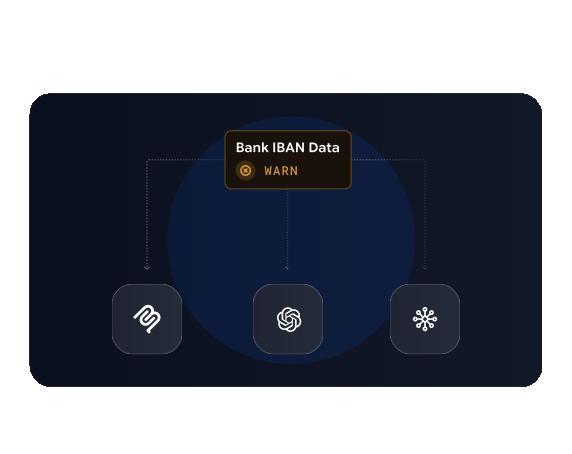
Catch accidental data exposure and enforce the right action before sensitive information leaves the device.
- Prompt & response protection
- Allow, Warn, Block & Redact
- Policy enforcement under 100ms
Secure Claude beyond the browser
Extend protection from Claude to the broader AI workflows employees use every day.
- AI apps & agents
- Unified policy controls
- MCP server protection


What changes for you?
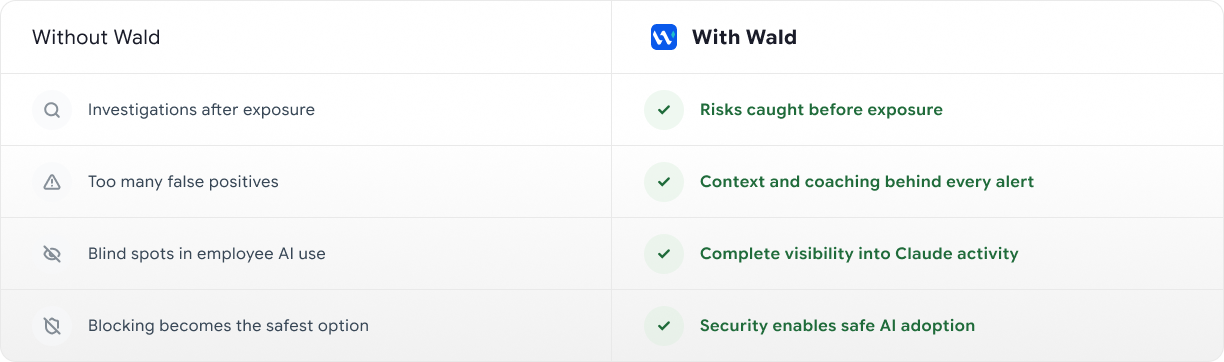
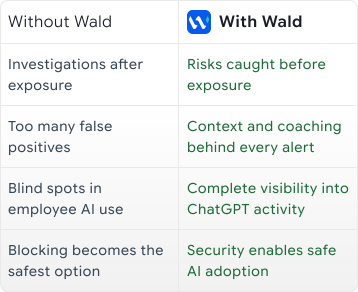
Why Context Beats Keywords
Legacy DLP looks for keywords and patterns. Wald's on-device SLMs understand the intent and business context behind every Claude prompt, enabling accurate policy decisions before sensitive data reaches AI.


Frequently Asked Questions
Contact UsWhat does Claude DLP protect against?
Wald’s Claude DLP helps prevent employees from accidentally sharing sensitive information with Claude, including source code, credentials, customer data, financial information, internal documents, and proprietary business information.
Wald evaluates the context of the interaction before sensitive data leaves the device and can Allow, Warn, Block, or Redact based on the organization’s policies.
Is Claude Enterprise secure enough for sensitive company data?
Claude’s enterprise controls address important areas such as access, administration, data handling, and auditability. But enterprise security controls do not necessarily determine what an employee is allowed to put into every Claude interaction.
Wald adds a contextual DLP layer that evaluates the data employees share with Claude and can intervene before sensitive information is exposed.
This distinction is a recurring concern among organizations evaluating Claude for client, financial, HR, and other sensitive data.
How do I stop employees from accidentally putting sensitive data into Claude?
Traditional policies can tell employees what not to share, but they don't necessarily stop an accidental disclosure in the moment.
Wald evaluates Claude interactions before data leaves the device, identifies sensitive information in context, and can coach the employee, warn them, block the interaction, or redact the sensitive content.
Can Claude DLP reduce false positives?
Yes. Instead of triggering a policy simply because sensitive data is detected, Wald evaluates the context and intent of the interaction.
This helps distinguish legitimate AI-assisted work from risky data sharing, reducing unnecessary alerts and giving employees guidance rather than blocking every interaction containing sensitive information
What about Shadow AI if employees use personal Claude accounts?
Shadow AI can become a concern when security controls create too much friction for employees. Frequent false positives can make approved AI tools harder to use, encouraging users to seek alternatives. Wald’s Contextual Intelligence understands the intent and context behind AI interactions, enabling more precise controls that protect sensitive data while giving employees the flexibility to work productively.
Can I control what Claude can access through connectors and AI agents?
Claude is increasingly being used with connected business data and agentic workflows. Security teams therefore need to consider not only what employees send to Claude, but what Claude can access and act on.
Wald extends its policy layer across AI applications, agents, and MCP servers, helping organizations apply consistent controls as AI moves beyond simple chat interactions. Concerns around connectors, permissions, agent actions, and audit trails are already appearing in enterprise Claude deployments
How is Claude DLP different from traditional DLP?
Traditional DLP generally relies on predefined policies, patterns, and classifications to determine whether data can leave an environment.
Wald adds contextual AI understanding. Its on-device SLM evaluates the data, the employee's intent, and the interaction context before determining the appropriate policy action.
That helps address both sides of the traditional DLP problem: false positives that create noise and false negatives that leave gaps.